
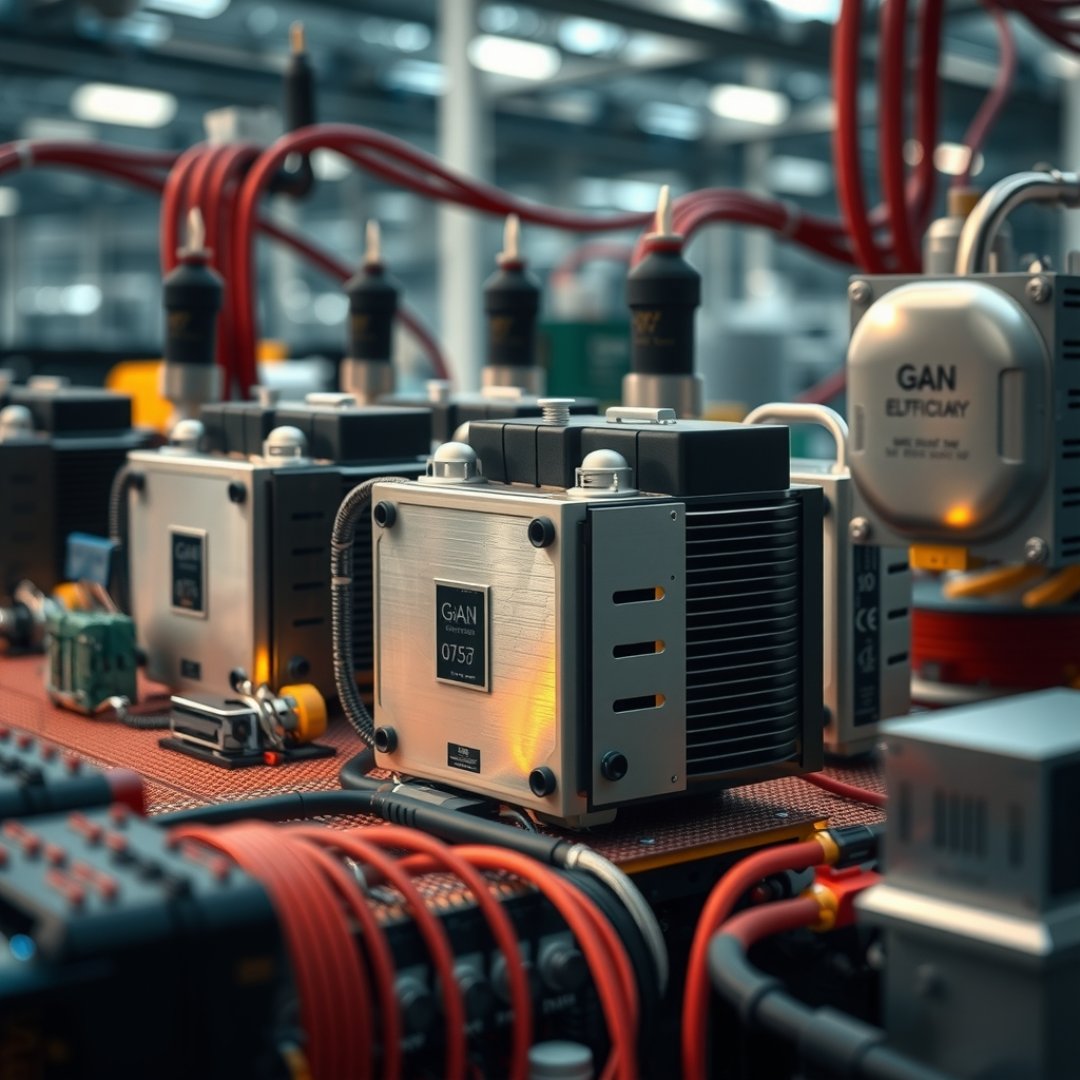
The integration of wide-bandgap semiconductors has reached a pivotal maturity point as of August 2026, positioning Gallium Nitride Power Converters as the gold standard for high-frequency power conversion in sustainable energy infrastructures. Unlike traditional silicon-based MOSFETs, the inherent material properties of GaN allow for significantly higher electron mobility and a wider bandgap, which directly translates to reduced switching losses and improved thermal management in compact power electronics. As energy systems move toward decentralized topologies, the demand for power converters that operate at megahertz frequencies while maintaining high efficiency becomes critical for minimizing physical footprint and maximizing overall system reliability. By leveraging superior charge density and lower parasitic capacitance, these advanced power modules are enabling a new generation of bidirectional EV chargers and high-density solar inverters that meet stringent utility-grade operational requirements while lowering lifecycle CAPEX for grid operators.
Technical Mechanisms of High-Frequency Switching
Physical Advantages Over Silicon
Gallium Nitride (GaN) structures provide a significantly lower gate charge and output capacitance compared to silicon-based equivalents. This reduction allows for faster switching transitions, enabling engineers to push converter switching frequencies into the multi-megahertz range.
- Reduced Switching Losses: Lower dynamic on-resistance during transient states directly minimizes energy waste as heat.
- Thermal Efficiency: Higher thermal conductivity allows for operation at junction temperatures exceeding 175°C without compromising structural integrity.
- Size Reduction: High-frequency capability enables the use of smaller passive components like inductors and capacitors, reducing total hardware volume by up to 40%.
Grid Integration and Efficiency Metrics
Operational Performance in 2026
In modern smart grid applications, efficiency metrics are defined by peak conversion rates that regularly exceed 98.5%. These Gallium Nitride Power Converters are compliant with updated IEEE 1547 standards, ensuring stable voltage regulation and harmonic distortion mitigation under fluctuating grid conditions.
Key Performance Indicators (KPIs) include:
- Power Density: Current architectures now achieve over 5 kW/L, facilitating deployment in space-constrained microgrid control cabinets.
- Switching Frequency: Stabilized operation at 2 MHz, which simplifies filter design and lowers electromagnetic interference (EMI).
- Bidirectional Capability: Essential for vehicle-to-grid (V2G) systems requiring seamless AC/DC conversion in both charging and discharging modes.
Economic Implications and Industrial Adoption
CAPEX and Reliability Analysis
While the initial cost of Gallium Nitride components remains higher than commodity silicon, the total cost of ownership (TCO) is increasingly favorable due to the reduction in cooling requirements and extended maintenance intervals. Industrial integrators are finding that the system-level benefits—such as smaller heat sinks and reduced cabinetry footprint—often offset the initial procurement premiums.
Regulatory Compliance
Modern designs must align with the EU RED III directives regarding energy efficiency in power conversion hardware. Implementing GaN-based topologies helps manufacturers exceed these efficiency thresholds, securing long-term certification and minimizing the financial risks associated with future, stricter energy intensity mandates.
Frequently Asked Questions
Why are Gallium Nitride Power Converters more efficient than silicon?
GaN has a wider bandgap and higher electron mobility than silicon, allowing for faster switching with significantly lower parasitic losses and heat generation.
What is the primary benefit of high-frequency switching in converters?
Higher switching frequencies allow for smaller physical capacitors and inductors, enabling a reduction in the overall volume and weight of the power electronics unit.
Are GaN converters suitable for utility-scale grid applications?
Yes, they are increasingly utilized in utility-scale solar inverters and bidirectional EV grid-tie chargers due to their high reliability and efficiency at high power densities.