The integration of Supercritical CO2 Power cycles has emerged as a cornerstone of industrial decarbonization strategies in 2026, offering a transformative approach to harvesting waste thermal energy. By utilizing carbon dioxide in its supercritical state, where it exhibits both gas-like transport properties and liquid-like density, these closed-loop Brayton cycles achieve unprecedented energy conversion efficiencies that traditional steam-based Rankine systems cannot match. As heavy industries prioritize reducing their carbon footprint and operational overhead, the deployment of this technology enables the recapture of high-grade waste heat from manufacturing processes, turning potential exhaust into a valuable secondary electricity source. This article examines the thermodynamic advancements, mechanical scalability, and long-term economic benefits associated with implementing these systems within modern industrial frameworks, highlighting why this hardware solution is currently leading the transition toward circular energy economies.
Thermodynamic Foundations and Cycle Efficiency
The Supercritical Advantage
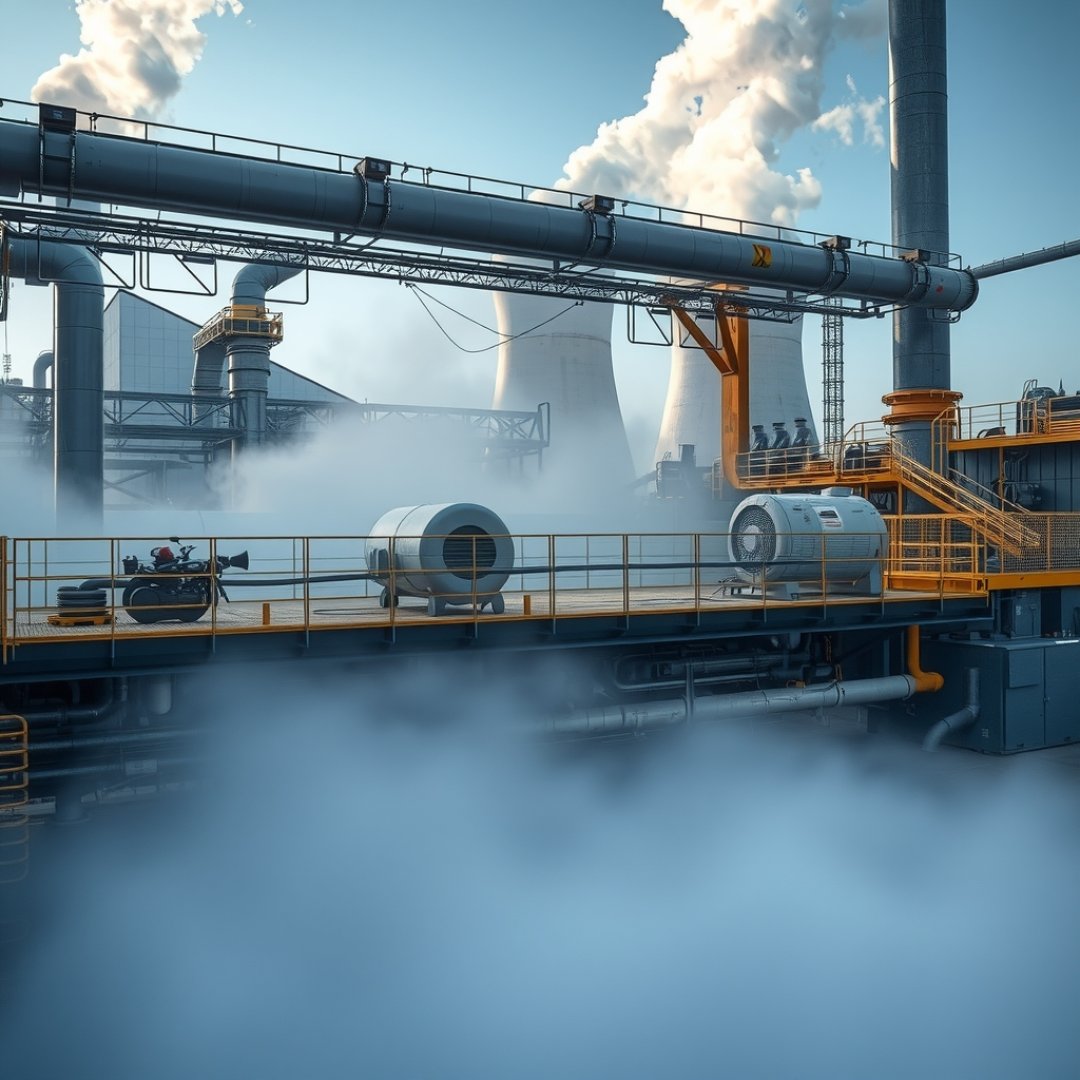
Unlike steam cycles, Supercritical CO2 Power systems operate using a dense fluid that allows for significantly smaller turbomachinery. This compactness is made possible because the fluid remains dense throughout the cycle, reducing the work required for compression near the critical point.
- High Power Density: Smaller turbine footprints allow for modular integration into existing industrial sites.
- Thermal Efficiency: Modern recuperated cycles consistently exceed 45% thermal-to-electric conversion efficiency.
- Temperature Versatility: Optimization across a broad temperature spectrum, from 400°C to 700°C, maximizes recovery potential.
Technical Scaling and Hardware Reliability
Challenges in Turbomachinery Design
Engineering robust hardware for supercritical fluid environments requires advanced material science to prevent corrosion and stress-related fatigue. In 2026, manufacturers are deploying specialized nickel-based superalloys to handle the high pressures and temperatures required for sustained operation.
- Pressure Management: Standard systems operate at peak pressures exceeding 20 MPa, requiring high-grade sealing and robust piping architectures.
- Dynamic Control: Advanced AI-driven monitoring ensures stable operation during fluctuating waste heat supply, adhering to IEEE standards for grid-tied hardware.
Economic Viability and Regulatory Compliance
ROI and Decarbonization Metrics
The transition toward these systems is driven by a combination of carbon pricing and energy savings. Under the EU RED III and similar global standards, industrial facilities are increasingly incentivized to demonstrate improved secondary energy recovery.
- CAPEX Mitigation: Modular designs reduce onsite assembly time and installation costs compared to custom steam plants.
- Operational Savings: Direct grid displacement allows facilities to shorten payback periods, often achieving a full ROI within 4 to 6 years of continuous service.
Frequently Asked Questions
Why is Supercritical CO2 more efficient than steam in industrial settings?
Supercritical CO2 maintains high density, which reduces the compressor work required and allows for smaller, more efficient turbine components compared to low-density steam.
What is the typical operating temperature range for these systems?
Most industrial-grade systems currently optimize performance between 400°C and 700°C, making them ideal for steel mills, cement plants, and large-scale manufacturing furnaces.
Does this technology integrate with existing power grids?
Yes, current hardware implementations follow standard grid synchronization protocols (such as IEEE 1547) to ensure safe, stable power injection from recovered waste heat.