
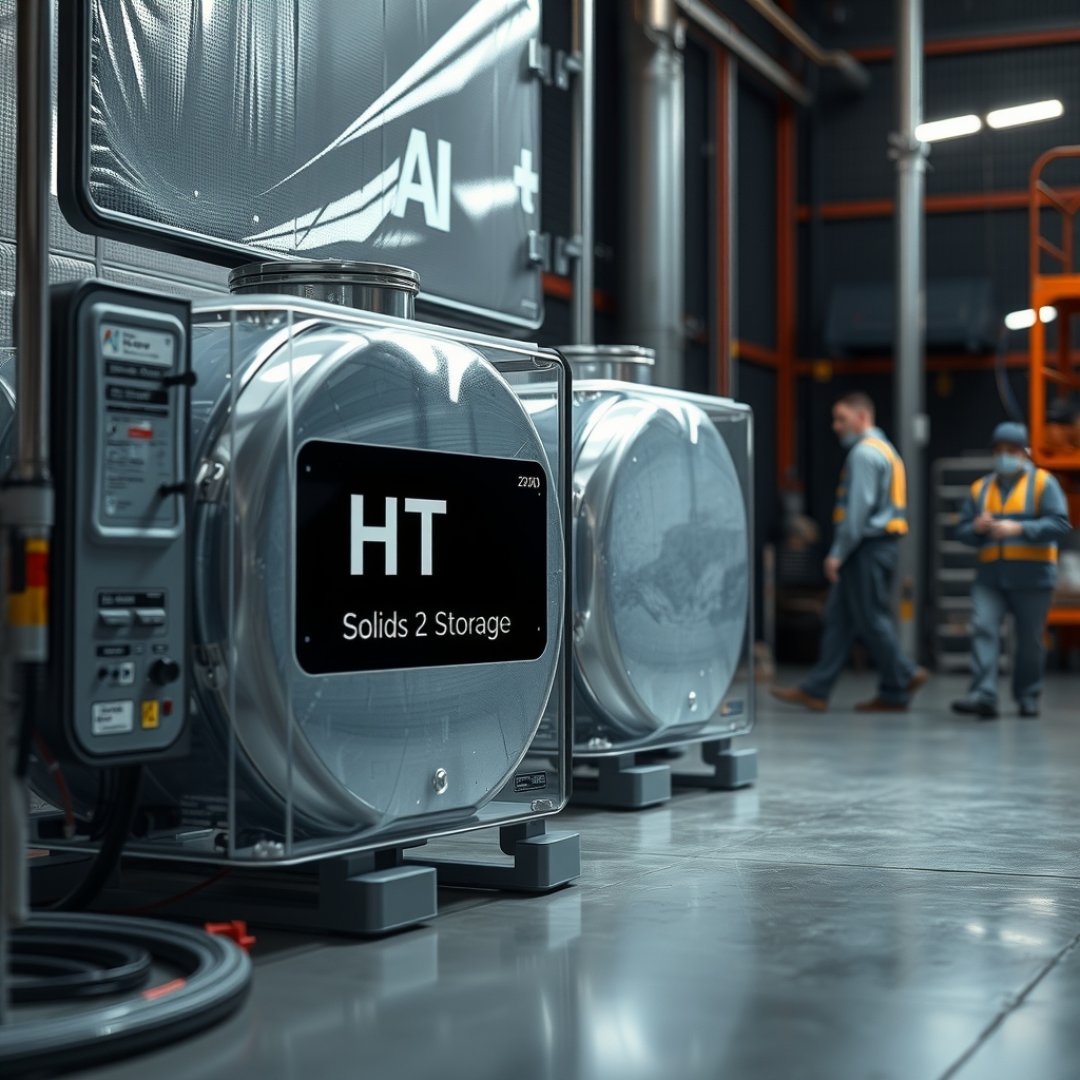
The integration of solid-state hydrogen storage systems into the modern renewable energy grid has reached a pivotal juncture in 2026, as engineers prioritize volumetric efficiency over traditional gaseous compression methods. By utilizing metal hydrides and complex chemical adsorbents, researchers are effectively overcoming the historical barriers associated with low-density storage. This shift is essential for scaling long-duration grid backups, as solid-state hydrogen storage allows for a more compact and inherently safer architecture compared to high-pressure tanks. As the industry moves toward standardizing these chemical storage modules, the focus remains on mitigating thermal management challenges during the exothermic adsorption phases. Achieving high energy densities requires precise control over the lattice structure of the host materials to ensure rapid kinetics and high cycling capacity without compromising structural integrity over thousands of operational hours.
Material Advances in Metal Hydride Systems
Optimizing Interstitial Capacity
Current research in 2026 emphasizes the use of magnesium-based alloys doped with transition metals to enhance reversible storage capacity. By refining the microstructure, developers are minimizing the H2 dissociation energy required for rapid refueling.
- Magnesium Hydride (MgH2): Achieving theoretical volumetric densities exceeding 110 kg/m3.
- Catalytic Doping: The introduction of nickel and titanium nanoparticles to lower operating temperatures below 250°C.
- Kinetics: Improving reaction rates to support grid-level fast-response energy balancing.
Thermal Management and Cycle Stability
Mitigating Exothermic Degradation
Effective thermal regulation remains the primary obstacle for deploying large-scale solid-state modules. Because hydrogen absorption is highly exothermic, managing internal heat flux is critical to preventing lattice strain and material pulverization.
Advanced systems now integrate phase change material (PCM) liners within the storage vessel to buffer thermal swings. This hardware approach ensures that the operating temperature stays within the optimal range for the catalyst, significantly extending the cycle life to the 5,000-cycle threshold required for commercial grid deployments.
Grid Integration and Safety Standards
Compliance with Global Infrastructure
The deployment of solid-state hydrogen storage is currently governed by emerging safety protocols for stationary, pressurized, and chemical energy storage. Engineers are aligning these storage solutions with IEEE 1547 standards to ensure seamless interaction with grid-forming inverters.
Economic viability is driven by the reduction in CAPEX for high-pressure infrastructure. By operating at lower pressures, these systems significantly reduce the requirements for secondary containment and complex monitoring hardware, providing a robust solution for decentralized power plants.
Frequently Asked Questions
What is the primary advantage of solid-state hydrogen storage over high-pressure gas?
The primary advantage is vastly higher volumetric energy density and improved safety, as the hydrogen is chemically bound within a solid matrix, eliminating the need for high-pressure containment vessels.
How does temperature affect solid-state hydrogen storage performance?
Temperature is critical; lower temperatures are typically required for efficient adsorption, while higher temperatures are often necessary to facilitate the release of hydrogen gas, making integrated thermal management essential.
Are these storage systems compatible with current grid standards?
Yes, when integrated with power electronics that comply with IEEE 1547, solid-state storage systems can perform effectively as grid-scale energy buffers.