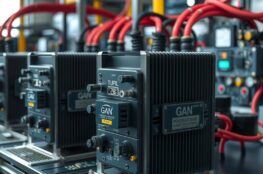
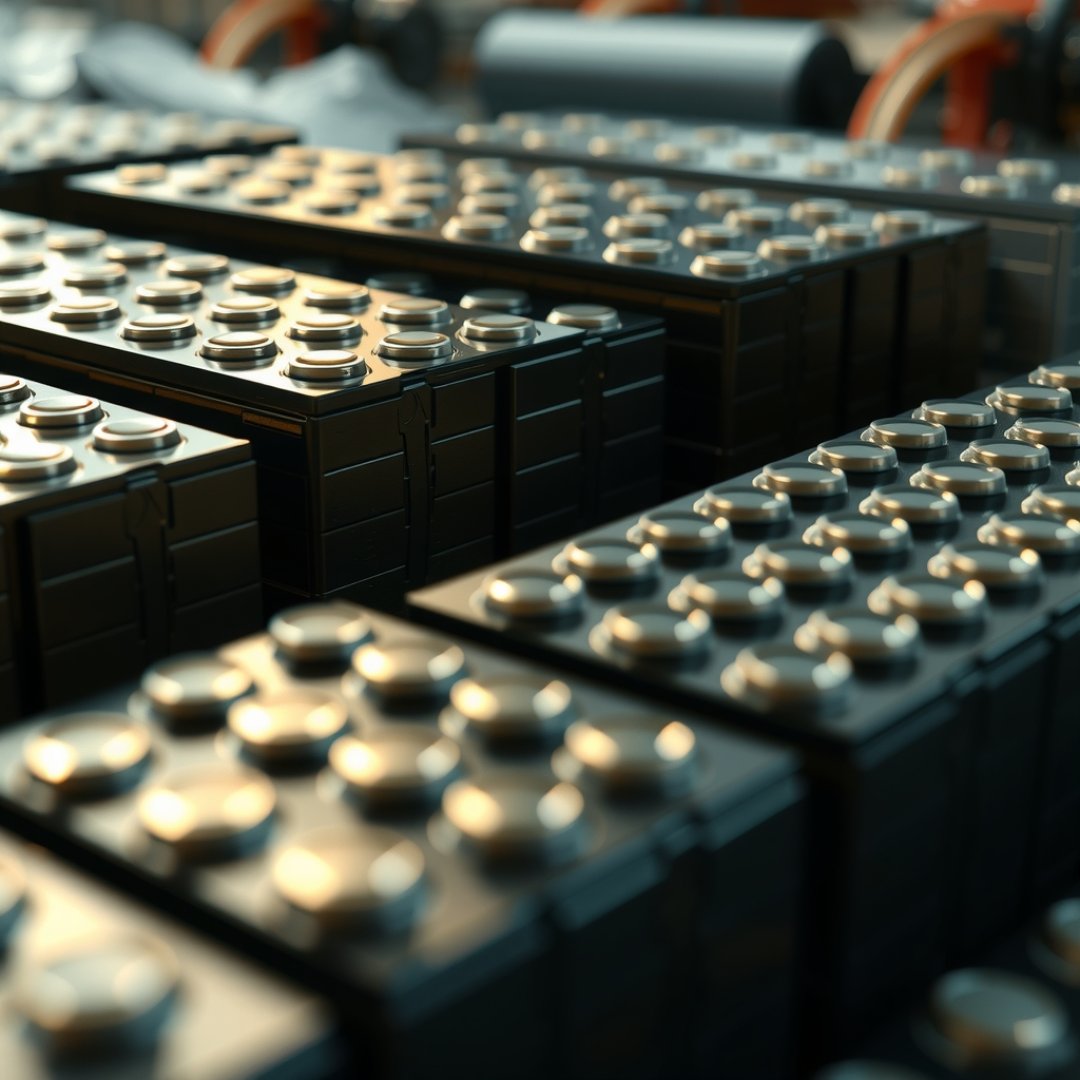
The evolution of high-performance energy storage in late 2026 has centered on the refinement of solid-state battery anodes, specifically regarding their interface with ceramic and polymer electrolytes. Engineers are currently overcoming the historic hurdles of dendrite formation and poor interfacial contact by implementing advanced lithium-metal stabilization techniques. These solid-state battery anodes represent a critical transition from traditional graphite-based systems to high-capacity metal architectures, enabling significantly higher volumetric energy densities. By focusing on mechanical pressure management and the deployment of thin-film coatings, manufacturers are now achieving the necessary cycle life for commercial electric vehicle and grid-scale deployments while maintaining the thermal safety metrics defined by current industry standards.
Mitigating Dendrite Propagation at the Electrolyte Interface
Interfacial Engineering
The primary failure mode for solid-state architectures remains the proliferation of metallic lithium filaments through grain boundaries. By utilizing nanostructured buffer layers, such as amorphous silicon or thin-film zinc-doped coatings, engineers are successfully homogenizing the flux of lithium ions. This reduces local current density hotspots, effectively suppressing dendrite nucleation during high-rate charging.
Mechanical Pressure Considerations
Maintaining a stable stack pressure—typically within the 1 to 5 MPa range—is essential for sustaining contact at the anode interface. Recent 2026 advancements involve integrated pressure-sensitive housing designs that compensate for volume expansion, preventing mechanical delamination of the solid electrolyte layer.
Volumetric Energy Density and Material Selection
Transitioning to Lithium Metal
To move beyond the theoretical limits of intercalated carbon, the industry is standardizing on lithium metal as the core component of solid-state battery anodes. This transition allows for a shift from traditional energy densities of 250 Wh/kg toward target benchmarks exceeding 450 Wh/kg at the cell level.
- High-Capacity Loading: Achieving specific capacities in excess of 3,800 mAh/g.
- Volume Expansion Control: Utilizing host structures like 3D carbon scaffolds to accommodate morphological changes during stripping and plating phases.
- Cycle Life Metrics: Currently, commercial-grade cells are reaching 1,000 deep-discharge cycles with less than 20% capacity fade, verified under standardized testing protocols.
Standards and Commercial Scalability
Regulatory and Safety Compliance
As these technologies move toward mass production, compliance with ISO 12405-4 testing procedures has become mandatory. The shift to solid-state systems inherently reduces flammability risks by replacing volatile liquid electrolytes with inorganic sulfides or solid polymer matrixes, simplifying the requirements for external thermal management systems (TMS).
CAPEX and Manufacturing Throughput
The move toward roll-to-roll manufacturing for solid-state electrolyte separators is currently reducing production costs. While current CAPEX remains higher than conventional liquid-electrolyte cells, the removal of heavy cooling infrastructure and fire-suppression hardware results in a favorable Total Cost of Ownership (TCO) for fleet operators and utility-scale grid integrators by late 2026.
Frequently Asked Questions
What is the main advantage of solid-state battery anodes compared to graphite?
Solid-state battery anodes utilizing lithium metal offer significantly higher specific capacity and volumetric energy density, allowing for lighter, more compact battery modules.
How do engineers prevent dendrites in solid-state systems?
Engineers use thin-film interfacial coatings and precise stack pressure management to ensure uniform ion flux, effectively preventing the formation of dendrites that cause short circuits.
Are solid-state batteries commercially available in 2026?
Yes, high-end electric vehicle and specialized aerospace applications have begun integrating solid-state cells, with broader grid-scale adoption scaling up throughout 2026.