
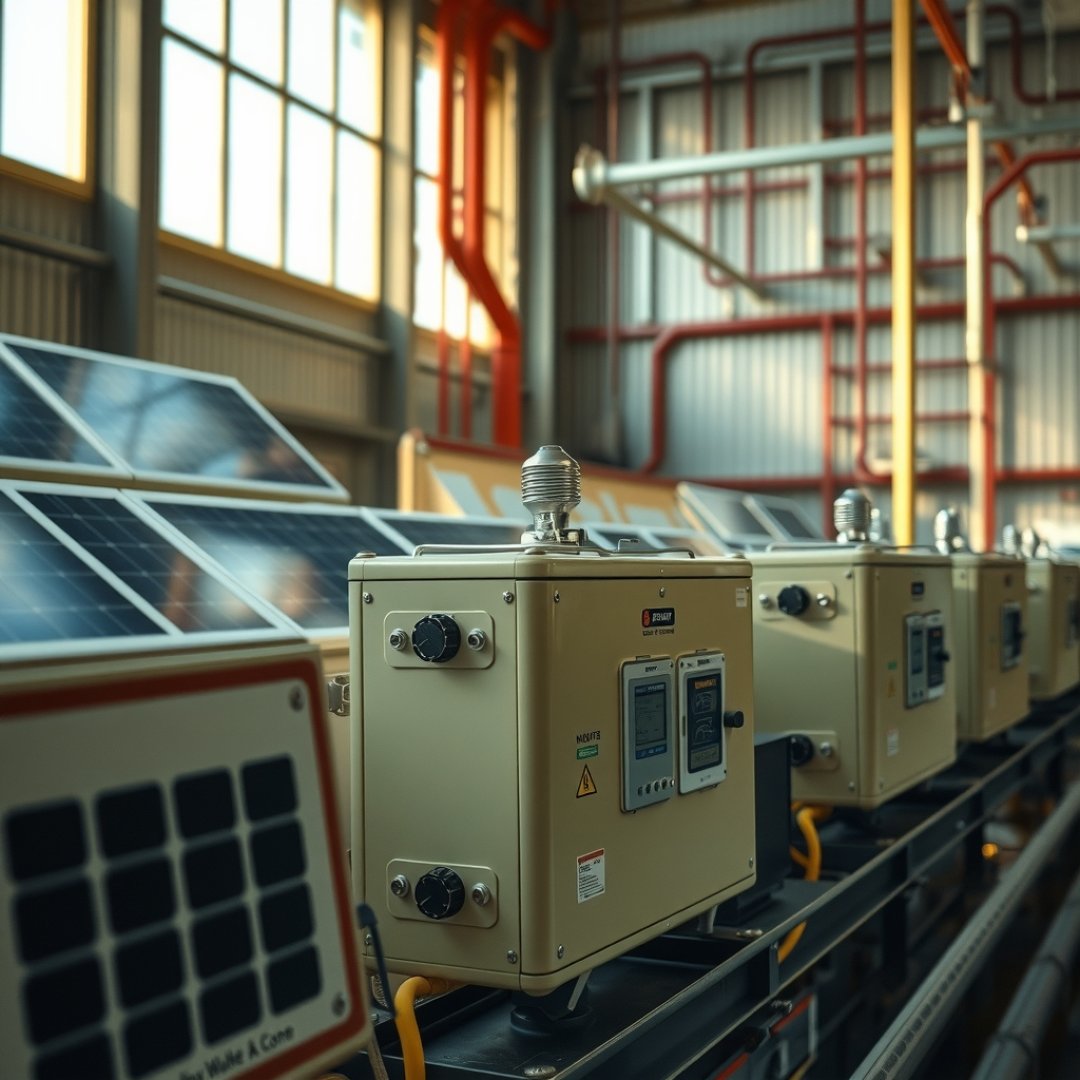
Thermophotovoltaic Energy Converters have emerged as a critical technological frontier for high-temperature waste heat recovery in industrial settings as of August 2026. By converting thermal radiation into electricity through low-bandgap photovoltaic cells, these systems bypass the inherent Carnot cycle limitations associated with traditional steam-cycle turbines. As industries face increasing pressure to meet stringent decarbonization targets, the ability of Thermophotovoltaic Energy Converters to capture heat from sources exceeding 1,200 degrees Celsius is providing a vital pathway for improving overall plant energy efficiency. This article examines the current state of emitter material development, the integration of optical filters to spectral match radiation, and the economic landscape of deploying these converters in heavy-duty manufacturing environments where waste heat streams are otherwise lost to the atmosphere.
Working Mechanisms and Spectral Efficiency
Photonic Crystal Emitters
The core mechanism of these converters relies on selective emitters that radiate heat at specific wavelengths. By utilizing photonic crystals, engineers can engineer the thermal emissivity spectrum, concentrating power into the narrow bandgap of the receiver cell.
Bandgap Engineering
Advanced low-bandgap cells, often utilizing Indium Gallium Arsenide Antimonide (InGaAsSb) structures, are optimized to respond to infrared radiation.
- Optical Filters: Used to reflect sub-bandgap photons back to the emitter, effectively recycling energy within the system.
- Quantum Efficiency: Current lab-scale prototypes are achieving external quantum efficiencies exceeding 60 percent at optimal thermal densities.
Economic Metrics and Industrial Integration
CAPEX and ROI Analysis
For industrial operators, the Capital Expenditure (CAPEX) is primarily driven by the semiconductor cost of the high-performance photovoltaic cells. However, when integrated into heavy industrial processes like steel manufacturing or glass production, the reduction in primary fuel consumption yields a rapid return on investment.
Grid Ancillary Services
Integration with existing energy grids allows these systems to act as dispatchable sources. By coupling these converters with thermal storage reservoirs, facilities can participate in grid frequency regulation, providing a secondary revenue stream that improves the project’s financial viability beyond mere energy savings.
Regulatory Compliance and Industry Standards
Alignment with Energy Directives
The deployment of these systems must adhere to evolving international standards for industrial heat recovery. Under the EU RED III directive, waste heat utilization is increasingly recognized as a qualifying factor for industrial renewable energy credits.
Operational Safety Standards
Systems must meet strict IEEE 1547 requirements for interconnectivity when these converters are integrated into a facility’s microgrid architecture, ensuring that power export does not compromise the stability of the local grid during high-temperature cycling.
Frequently Asked Questions
What is the primary advantage of Thermophotovoltaic Energy Converters over steam turbines?
Thermophotovoltaic converters have no moving parts and are not constrained by the thermal efficiency limits imposed by the Carnot cycle, allowing for higher conversion efficiency in smaller, modular footprints.
What temperature range is optimal for these energy systems?
These systems perform most efficiently with heat sources ranging from 1,000 to 1,600 degrees Celsius, which is the range where the thermal radiation spectrum best matches the absorption characteristics of the photovoltaic cells.
Are these converters commercially viable today?
As of 2026, they are moving from pilot-scale industrial demonstrations to niche commercial deployments in high-heat industries like glass melting and primary metal smelting.