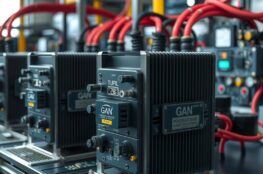

The search for sustainable, grid-scale energy storage solutions has shifted focus toward aqueous electrochemical systems that prioritize safety and material abundance. In 2026, the development of the Zinc-Manganese battery has emerged as a cornerstone for long-duration energy storage (LDES), offering a compelling alternative to traditional lithium-ion installations. These batteries utilize a mild aqueous electrolyte, which significantly mitigates the thermal runaway risks inherent in flammable organic electrolytes. By leveraging abundant manganese dioxide cathodes and metallic zinc anodes, this chemistry promises a dramatic reduction in CAPEX, making it a viable candidate for stationary utility-scale applications where high power density is secondary to cycle life and low-cost maintenance. As grid volatility increases with the penetration of intermittent renewables, the stability and discharge performance of these cells are being optimized to meet strict IEEE standards for grid-forming capability and peak shaving requirements.
Electrochemical Mechanisms and Stability
Redox Reactions in Aqueous Systems
The core of the Zinc-Manganese battery relies on the reversible deposition and stripping of zinc ions at the anode, coupled with the insertion and extraction of ions within the manganese dioxide cathode matrix. Unlike systems prone to dendritic growth, modern electrolyte additives—specifically zinc triflate or high-concentration sulfates—are now utilized to suppress parasitic hydrogen evolution.
- Anode Process: Zinc stripping and plating during discharge and charge cycles.
- Cathode Process: Proton-coupled electron transfer within the MnO2 framework.
- Safety Metric: The aqueous nature allows for a wide operating temperature window without active cooling requirements.
Grid-Scale Integration and Performance Metrics
Efficiency and Operational Lifetime
Engineers are currently targeting a cycle life exceeding 5,000 cycles at 80% depth of discharge (DoD) for commercial-grade deployments. The round-trip efficiency (RTE) for these systems currently hovers between 82% and 86%, which is competitive with alternative flow battery technologies.
- DoD Optimization: Maintaining chemical stability through precise voltage window control to prevent irreversible phase transformations in the cathode.
- Scaling Considerations: Modular containerized designs enable rapid deployment for utility-scale smart grid projects.
- Regulatory Standards: Ensuring compliance with IEC 62933-5-2 regarding safety requirements for grid-integrated energy storage systems.
Economic ROI and Market Viability
Reducing Total Cost of Ownership
The economic value proposition of the Zinc-Manganese battery rests on the low cost of raw materials and the ease of manufacturing processes. Because these cells do not require cleanroom environments during production, the capital expenditure is significantly lower than that of nickel-manganese-cobalt (NMC) chemistries.
Strategic Advantages:
- Supply Chain Security: Reduction in reliance on critical minerals like lithium and cobalt.
- Recyclability: Aqueous components allow for simplified end-of-life processing and material recovery.
- Operational Savings: Minimal balance-of-plant requirements lead to lower maintenance costs over a 15-year lifecycle.
Frequently Asked Questions
How do Zinc-Manganese batteries compare to lithium-ion for grid storage?
Zinc-Manganese batteries offer significantly higher safety profiles due to non-flammable aqueous electrolytes and lower upfront material costs, though they generally provide lower energy density.
What is the expected lifespan of a utility-scale Zinc-Manganese system in 2026?
Engineers are targeting life cycles of 5,000 to 10,000 cycles, depending on depth-of-discharge protocols and electrolyte chemistry stability.
Do these batteries require specialized cooling systems?
No. Due to their high thermal stability, they function efficiently in ambient conditions, reducing the power consumption of auxiliary balance-of-plant hardware.