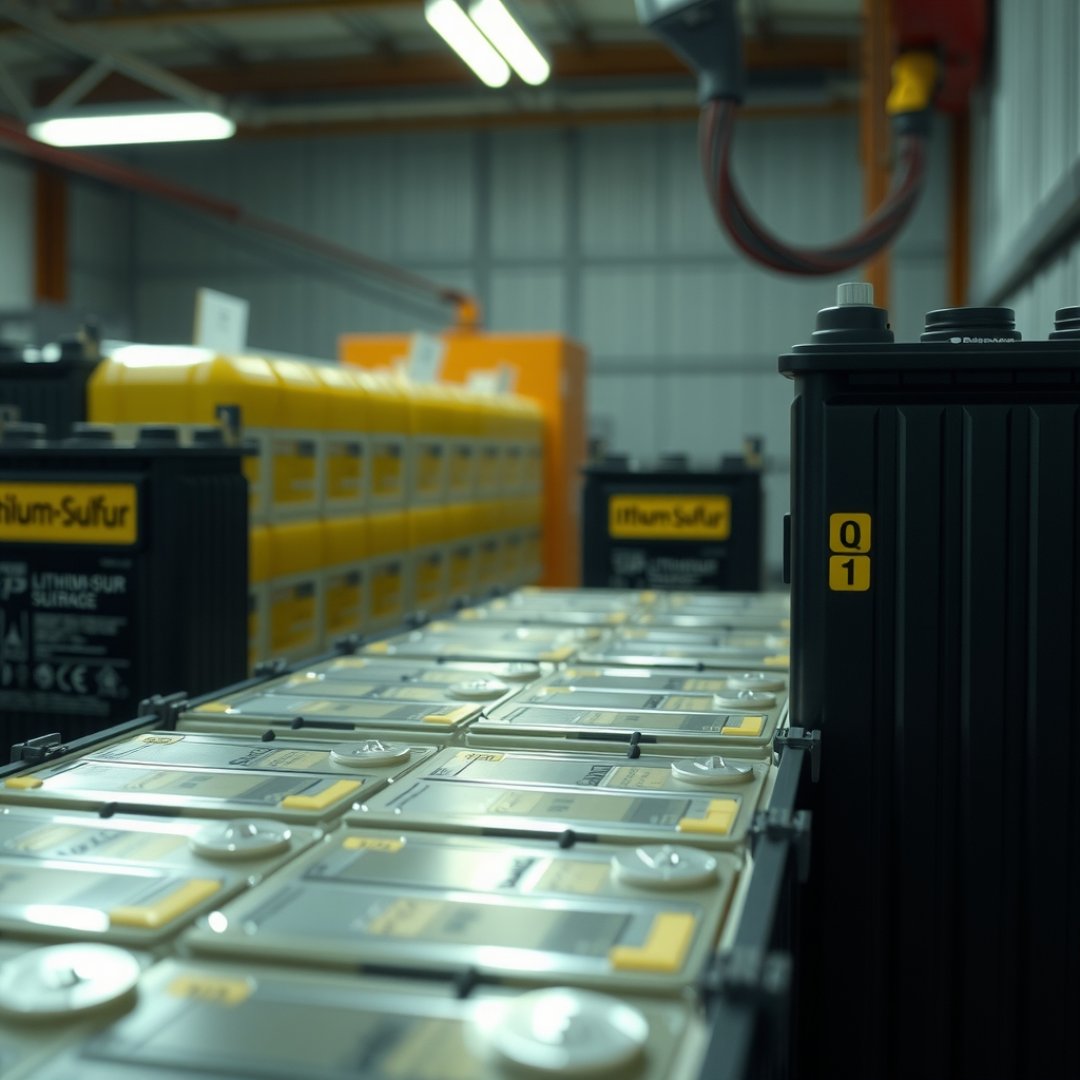
As the industry shifts away from cobalt-dependent chemistries to reduce geopolitical supply chain risks and environmental impact, Lithium-Sulfur Batteries have emerged as a leading contender for next-generation energy storage. By 2026, the technical hurdles associated with sulfur cathode dissolution and volume expansion have been significantly mitigated through advanced nanostructured host materials and electrolyte formulations. These developments are critical for scaling high-density energy storage, offering theoretical energy densities that vastly exceed traditional lithium-ion configurations. By leveraging low-cost sulfur, manufacturers are now optimizing Lithium-Sulfur Batteries to achieve the cycle life stability required for both stationary grid storage and long-range electric mobility applications, effectively lowering the cost per kilowatt-hour while maintaining structural integrity over thousands of operational cycles.
Overcoming the Polysulfide Shuttle Effect
Mechanisms of Cathode Degradation
The primary barrier to commercializing high-performance sulfur cathodes has historically been the polysulfide shuttle effect, where intermediate lithium polysulfides dissolve into the electrolyte, causing active material loss and self-discharge. Modern cell architectures in 2026 utilize functionalized carbon nanotubes and metal-organic frameworks (MOFs) to physically trap these polysulfides within the cathode structure.
- Nanostructured confinement: Implementing sulfur within micro-porous carbon architectures inhibits migration.
- Electrolyte additives: Utilizing localized high-concentration electrolytes (LHCE) minimizes the solubility of lithium polysulfides, ensuring long-term chemical stability.
- Solid-state separators: Integration of ceramic-polymer composite membranes provides a mechanical barrier to dendrite growth and ion-shuttle inhibition.
Energy Density and Material Efficiency
Performance Metrics and Benchmarks
Lithium-Sulfur Batteries are currently demonstrating gravimetric energy densities reaching 500-600 Wh/kg, nearly doubling the capacity of state-of-the-art NMC (Nickel Manganese Cobalt) cells. This massive leap in density is attributed to the high theoretical capacity of sulfur (1675 mAh/g) compared to traditional transition metal oxide cathodes.
Economic Impact
By eliminating cobalt and nickel from the cathode, the raw material CAPEX is reduced by approximately 35% compared to conventional lithium-ion cells. This economic profile makes these batteries particularly attractive for grid-scale energy storage systems where total cost of ownership (TCO) is a primary driver for deployment feasibility.
Standardization and Grid Integration
Aligning with IEEE and UL Standards
As these cells transition from lab environments to grid integration, adherence to UL 1973 and IEEE 1547 standards is mandatory to ensure safety and interoperability. Battery management systems (BMS) for Lithium-Sulfur technologies now incorporate adaptive algorithms that monitor sulfur-specific voltage plateaus, which differ significantly from the linear discharge curves of standard chemistries.
- Thermal Management: Maintaining operation within a narrow temperature range (25-40°C) is essential to preserve the ionic conductivity of solid-electrolyte interphase (SEI) layers.
- State of Health (SoH) Monitoring: Real-time electrochemical impedance spectroscopy (EIS) is now standard in high-end modules to track sulfur utilization efficiency over time.
Frequently Asked Questions
What is the primary advantage of Lithium-Sulfur Batteries over lithium-ion?
Lithium-Sulfur batteries offer significantly higher theoretical gravimetric energy density and use abundant, low-cost materials like sulfur instead of expensive, conflict-prone cobalt.
How do 2026 models handle the ‘shuttle effect’?
Engineers are now using nanostructured carbon hosts and advanced solid-state separators to trap polysulfides and prevent their migration between electrodes, which stabilizes cycle life.
Are these batteries ready for mass-market grid storage?
While still maturing, they are currently being deployed in pilot utility-scale projects. They meet safety standards like UL 1973, though optimization of long-term cycle life remains the primary focus for widespread commercial adoption.