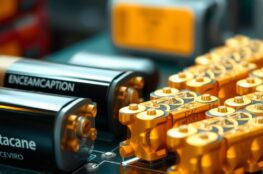

The integration of Hexagonal Boron Nitride Coatings has emerged as a pivotal advancement in Battery Energy Storage System (BESS) architecture as of August 2026. As energy density demands push lithium-ion cells toward their operational limits, the industry is shifting focus from reactive fire suppression to proactive thermal barrier technologies. By applying these high-thermal-conductivity ceramic layers directly to battery cell housings, engineers can significantly reduce the risk of thermal runaway propagation. This material, characterized by its superior dielectric strength and high thermal emissivity, serves as an essential fire-retardant barrier, preventing catastrophic heat transfer between adjacent cells during localized failure events. Implementing Boron Nitride Coatings addresses a critical failure point in grid-scale deployments, ensuring higher system reliability and meeting tightening international safety standards regarding hazardous event mitigation in high-capacity energy clusters.
Thermal Properties and Dielectric Performance
Engineering the Thermal Interface
Hexagonal Boron Nitride (h-BN) exhibits a unique combination of high thermal conductivity and excellent electrical insulation, making it an ideal candidate for protecting high-voltage battery modules. Unlike traditional polymer-based thermal pads, Boron Nitride Coatings maintain structural integrity at temperatures exceeding 800°C.
- Thermal Conductivity: Offers isotropic thermal dissipation exceeding 30 W/m·K in composite form.
- Dielectric Strength: Prevents short-circuiting during enclosure degradation, essential for modern BESS modular designs.
- Passive Regulation: Reduces the heat flux between the affected cell and neighbors, keeping adjacent cells below the 130°C critical threshold.
Mechanical Application and Manufacturing Scalability
Advanced Coating Protocols
Integrating these coatings into automated manufacturing lines requires precise deposition techniques to ensure uniform layer thickness. Current 2026 standards prioritize spray-coating and chemical vapor deposition (CVD) to achieve thin-film layers that do not compromise the volumetric energy density of the pack.
Deployment Advantages
- Ultrathin Profile: Layers of 50-100 micrometers provide robust thermal protection without increasing module footprint.
- High Adhesion: Compatibility with aluminum and steel housing prevents delamination during rapid thermal expansion cycles.
- Cost-Effectiveness: Reduced reliance on heavy, passive fire-suppression insulation blankets lowers total system weight and improves round-trip efficiency.
Regulatory Compliance and Grid-Scale Safety Metrics
Aligning with International Safety Standards
The implementation of these ceramic coatings is largely driven by the updated NFPA 855 and UL 9540A testing mandates. By incorporating Boron Nitride Coatings, system integrators can achieve a ‘non-propagating’ status under strenuous thermal abuse testing conditions. This effectively lowers the CAPEX associated with active fire suppression systems and high-maintenance cooling infrastructure.
Economic Impact
Reduced safety-clearance requirements between modules allow for a 10-15% increase in energy density per cubic meter. This densification is critical for urban grid-edge storage, where space is a premium and fire risk mitigation is a mandatory planning constraint.
Frequently Asked Questions
How do Boron Nitride Coatings differ from traditional ceramic wool?
Unlike bulky ceramic wool, Boron Nitride Coatings are applied as thin films directly to the cell surface, providing superior thermal conductivity and better space utilization.
Do these coatings affect the standard cooling cycles of a battery pack?
No, their high thermal conductivity actually assists in heat removal during normal operation, while acting as a barrier specifically during high-temperature runaway events.
Are these materials compliant with current BESS safety standards?
Yes, they are being integrated to exceed the safety requirements defined in UL 9540A, helping systems pass complex cell-to-cell propagation tests.