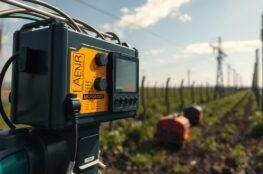

The integration of autonomous monitoring solutions within smart electrical infrastructures has accelerated significantly, driven by advancements in Ambient energy harvesting. As we navigate the complex requirements of modern energy distribution, the reliance on battery-operated sensors for grid health monitoring presents a significant maintenance burden. By leveraging kinetic, thermal, and electromagnetic wave conversion, engineers are now deploying self-powered nodes that eliminate the need for frequent battery replacements. This shift is critical for maintaining high-uptime predictive maintenance protocols across expansive grid networks. By capturing micro-watt energy levels from the surrounding environment, these low-power IoT devices ensure consistent data transmission, contributing to the broader goal of a self-sustaining and resilient smart energy grid in 2026.
Conversion Mechanisms and Efficiency Metrics
Transducer Technologies
Current ambient energy harvesting deployments utilize diverse transduction mechanisms to convert environmental stimuli into electrical power. Piezoelectric materials are standard for capturing low-frequency mechanical vibrations from transmission towers, while thermoelectric generators (TEGs) leverage temperature gradients between conductors and the ambient air.
Efficiency Considerations
- Power Density: Modern harvesting modules achieve power densities between 10µW/cm² and 100µW/cm², sufficient for ultra-low-power microcontrollers (MCUs) running Zigbee or LoRaWAN stacks.
- Energy Storage: Supercapacitors are increasingly preferred over lithium-polymer batteries due to their higher cycle life, supporting deep discharge-charge cycles inherent in intermittent ambient energy availability.
Grid-Edge Integration and Protocol Standards
Data Transmission Protocols
For efficient data throughput, these sensor nodes rely on optimized communication standards compatible with smart grid architecture. Adherence to IEEE 802.15.4 remains the gold standard for low-rate wireless personal area networks, ensuring minimal energy loss during the handshake and transmission phases.
Deployment Optimization
System integrators must evaluate the Duty Cycle of the sensor node. By implementing intelligent sleep-mode algorithms that sync with the grid’s operational frequency, engineers maximize the effective energy harvesting window while maintaining sufficient data fidelity for fault detection and real-time voltage monitoring.
Economic Viability and CAPEX Implications
Cost Reduction Models
The primary economic driver for adopting self-powered IoT nodes is the substantial reduction in operational expenditure (OPEX) related to field maintenance. In hard-to-reach locations like high-voltage transmission lines, the labor cost of physical inspections exceeds the initial hardware cost within eighteen months of deployment.
Scalability and ROI
While the initial CAPEX for advanced harvesters is higher than traditional battery-powered alternatives, the lifecycle cost benefits are clear. As manufacturing processes for thin-film thermoelectric and high-sensitivity piezoelectric materials continue to scale, the total cost of ownership (TCO) for smart grid monitoring infrastructure is projected to decrease by 22% by the close of 2026.
Frequently Asked Questions
What is the primary advantage of ambient energy harvesting for grid sensors?
It provides a perpetual power source, eliminating the need for periodic battery replacement and reducing long-term maintenance costs in remote areas.
Which harvesting method is most effective for transmission tower monitoring?
Piezoelectric harvesting is generally preferred as it effectively captures low-frequency structural vibrations inherent in grid infrastructure.
How does this technology comply with IEEE 802.15.4 standards?
The sensor nodes are designed to optimize their power consumption cycles to fit within the low-power communication framework required by the IEEE 802.15.4 standard.