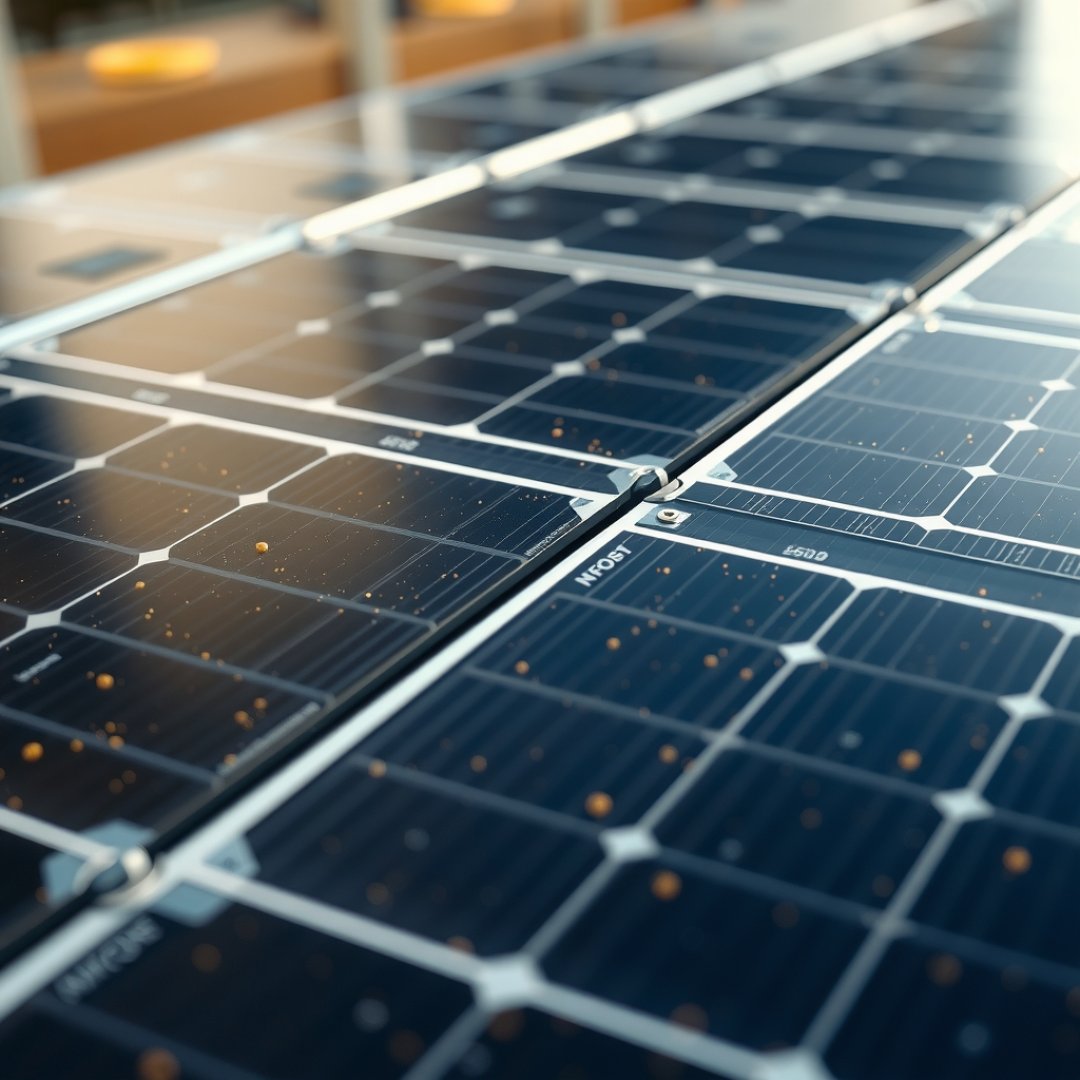
The commercialization trajectory of Perovskite Solar Cells has reached a critical juncture in 2026, shifting focus from raw laboratory efficiency records toward rigorous field-proven durability. While these materials have demonstrated remarkable power conversion efficiency, the industry now prioritizes the mastery of long-term stability metrics under diverse environmental stressors. For engineers and system integrators, the challenge remains to reconcile the high-performance potential of metal-halide perovskite structures with the stringent reliability standards required for 25-year operational lifespans in utility-scale applications. Addressing moisture sensitivity, ion migration, and thermal degradation through advanced encapsulation techniques is essential for their successful transition into the competitive global solar market, where grid-level deployment necessitates consistent capacity factors and predictable decay rates.
Mechanisms of Perovskite Degradation
Intrinsic and Extrinsic Instability
The degradation of perovskite absorbers primarily stems from their sensitivity to environmental factors such as humidity, ultraviolet light, and operational heat. Ion migration remains a significant concern, where halide vacancies facilitate the movement of ions under electric fields, leading to hysteresis in current-voltage curves.
- Moisture Ingress: Atmospheric water causes the chemical decomposition of the perovskite lattice into lead iodide.
- Thermal Stress: High-temperature operation accelerates the volatilization of organic components, particularly in MA-based (methylammonium) configurations.
- Interface Instability: The chemical reactivity at the interface between the perovskite layer and the charge transport layers (CTL) often triggers parasitic reactions.
Advances in Encapsulation and Stability Metrics
Standardized Reliability Testing
To meet IEC 61215 standards, manufacturers are implementing multi-layer encapsulation architectures designed to minimize gas permeability. ALD (Atomic Layer Deposition) techniques are increasingly utilized to apply thin, dense inorganic barriers that shield the sensitive perovskite layers from oxygen and vapor ingress.
Key metrics for 2026 assessments include:
- T80 Lifetime: Measuring the duration until the module efficiency drops to 80% of its initial value under accelerated light soaking.
- Damp Heat Testing: Performance retention after 1,000+ hours at 85°C and 85% relative humidity.
- Spectral Response Stability: Maintaining optoelectronic properties despite structural lattice adjustments over prolonged thermal cycling.
Economic Viability and Market Outlook
CAPEX and Levelized Cost of Energy
The integration of Perovskite Solar Cells into tandem configurations with silicon cells offers a clear path toward surpassing the 30% efficiency threshold in commercial modules. From a Levelized Cost of Energy (LCOE) perspective, the lower manufacturing cost—enabled by solution-processing techniques such as slot-die coating—must be balanced against the CAPEX required for sophisticated hermetic sealing.
As of late 2026, industry leaders are focusing on the shift from laboratory-scale batch processes to high-throughput roll-to-roll manufacturing. This scalability is vital for achieving parity with traditional crystalline silicon incumbents. While the initial investment in barrier technology increases the per-watt cost, the significant yield gains from improved light absorption in the blue spectral range provide a strong economic justification for utility-scale stakeholders.
Frequently Asked Questions
What is the current industry standard for Perovskite Solar Cell stability?
The industry is currently moving toward alignment with IEC 61215 protocols, specifically targeting T80 lifetime benchmarks that ensure 20 to 25 years of operational integrity in outdoor conditions.
How do tandem perovskite-silicon cells differ from single-junction cells?
Tandem cells leverage perovskites to absorb high-energy blue photons while the underlying silicon captures lower-energy red and infrared photons, significantly increasing overall power conversion efficiency compared to silicon-only architectures.
What is the role of atomic layer deposition in stabilizing these modules?
ALD provides pinhole-free, high-density barrier layers that effectively prevent moisture and oxygen from reaching the perovskite material, which is critical for extending the operational lifecycle of the device.