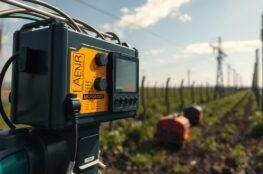

The integration of massive renewable energy sources into existing transmission corridors has pushed static thermal limits to their breaking point, necessitating a transition toward more agile infrastructure monitoring. Dynamic Line Rating (DLR) systems represent a critical advancement in smart grid management by enabling operators to adjust power transmission thresholds in real-time based on actual ambient conditions rather than conservative static ratings. By deploying high-precision sensors that monitor wind speed, ambient temperature, and solar radiation, utilities can accurately calculate the thermal capacity of conductors, often unlocking 10% to 30% additional capacity on existing lines. This technological shift is essential for 2026 grid architectures, where the intermittency of wind and solar assets demands rapid response times and enhanced situational awareness to prevent bottlenecks and ensure long-term system stability without the immediate need for expensive capital-intensive physical line upgrades.
Technical Mechanisms of DLR Sensors
Hardware Integration and Data Acquisition
Modern DLR deployments utilize a combination of direct and indirect sensing hardware. Direct sensors are mounted onto conductors to provide real-time tension or sag measurements, which are directly correlated to the conductor temperature. Conversely, weather stations installed along the transmission path provide inputs such as local ambient temperature and cross-wind velocity, which are then processed via IEEE 738-compliant models.
- Tension Monitoring: High-precision load cells measure the mechanical strain of the transmission line.
- Meteorological Stations: IoT-enabled probes provide hyper-local weather data to calculate convection cooling rates.
- Edge Processing: On-site compute modules analyze sensor input to produce a real-time ampacity calculation before transmitting it via encrypted low-latency protocols.
Operational Efficiency and Economic Impact
ROI and Capacity Enhancement
The primary economic driver for adopting DLR is the postponement of costly infrastructure reinforcements. By improving the utilization of current assets, utility providers see an immediate reduction in curtailment costs for renewable energy producers.
- Increased Throughput: Significant reduction in congestion during peak generation periods when cooling conditions are favorable.
- CAPEX Mitigation: Avoidance of physical reconductoring projects that often face multi-year permitting hurdles.
- Compliance Alignment: Systems are designed to integrate seamlessly with standard Energy Management Systems (EMS) while adhering to stringent grid reliability mandates.
Regulatory Compliance and Standardized Protocols
Interoperability in Modern Grids
The successful scaling of DLR technology relies on adherence to global standards for data security and interoperability. As grid operators digitize, integrating DLR data into existing IEEE 1547 and IEC 61850 frameworks has become mandatory for system-wide stability.
Data Security and Integrity
Encryption of sensor-to-server communication is critical to prevent malicious interference with grid control logic. Utilities are increasingly adopting standardized communication protocols to ensure that DLR inputs are trustworthy and compatible with automated switching operations, effectively turning transmission lines into intelligent components of the smart energy grid.
Frequently Asked Questions
How does Dynamic Line Rating differ from static line rating?
Static rating is a fixed value based on worst-case seasonal scenarios, whereas Dynamic Line Rating updates continuously based on real-time environmental factors that influence heat dissipation, allowing for higher amperage during favorable weather.
What is the primary benefit for renewable energy integration?
DLR helps by increasing the capacity of lines during periods of high wind or solar generation, which reduces the need to curtail clean energy due to transmission constraints.
Are DLR systems secure against cyber threats?
Yes, modern DLR installations utilize encrypted telemetry protocols and secure authentication measures that align with current energy industry standards for critical infrastructure cybersecurity.