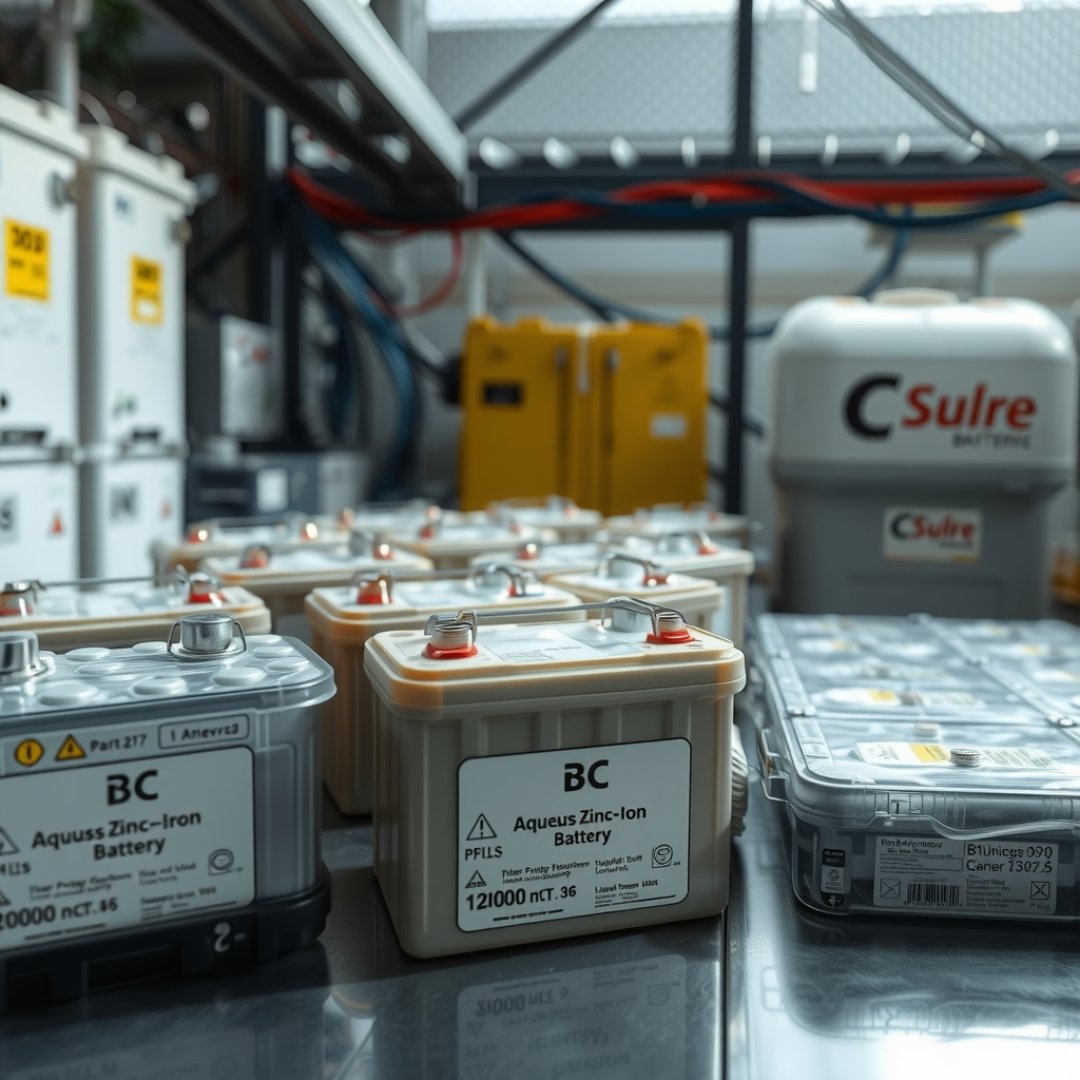
Aqueous Zinc-Ion Batteries are emerging as a pivotal alternative for stationary grid storage applications throughout 2026, offering a safer and more cost-effective profile compared to traditional lithium-ion chemistries. By utilizing water-based electrolytes, these systems mitigate thermal runaway risks, making them ideal for urban installations and long-duration energy management. However, widespread commercial adoption has historically been hindered by persistent challenges such as zinc dendrite growth, hydrogen evolution, and significant corrosion at the electrode-electrolyte interface. Recent engineering breakthroughs are now addressing these limitations through the deployment of highly engineered electrolyte additives that effectively modulate the electric double-layer structure. These chemical interventions not only suppress parasitic side reactions but also promote uniform metal deposition, significantly extending the depth of discharge (DoD) capabilities and cycle longevity required for modern, high-frequency energy services.
Electrolyte Additive Mechanisms
Stabilizing the Anode Interface
The primary hurdle for Aqueous Zinc-Ion Batteries is the localized concentration of electric fields at the anode surface, leading to needle-like dendrites. Innovative additives, such as cationic surfactants and organic small molecules, serve to adsorption onto active zinc sites. By increasing the energy barrier for zinc ion diffusion, these additives force a more uniform flux across the anode surface.
- Cationic Additives: Create electrostatic repulsion layers to prevent dendrite tip growth.
- Organic Solvating Agents: Reduce the thermodynamic activity of water, effectively suppressing the hydrogen evolution reaction (HER).
- Fluorinated Salts: Assist in forming a robust, ion-conductive solid-electrolyte interphase (SEI) layer that prevents direct corrosive contact between the aqueous solvent and the zinc substrate.
Performance Metrics and Economic ROI
Benchmarking Energy Density and Operational Lifespan
In 2026, the focus has shifted toward achieving competitive volumetric energy density without sacrificing stability. Current prototypes demonstrate a stable capacity retention exceeding 90% over 5,000 cycles at a 1C rate. This performance represents a critical inflection point for CAPEX-conscious utility providers. The utilization of earth-abundant zinc keeps raw material costs significantly lower than lithium-based competitors, providing a favorable ROI when evaluated over a 15-year operational lifecycle.
Critical Efficiency Indicators
- Coulombic Efficiency: Optimized systems now achieve >99.8% coulombic efficiency through precise pH buffering.
- Energy Efficiency: Round-trip efficiency for these grid-scale units is currently hitting the 85-90% mark.
- Thermal Stability: Operating temperature ranges have been successfully extended to -10°C to 50°C without active cooling requirements.
Compliance and Grid Integration Standards
Navigating IEEE 1547 and Regulatory Frameworks
Integration into the smart energy grid requires strict adherence to international safety and interoperability standards. As Aqueous Zinc-Ion Batteries move into pilot programs, they are being evaluated under the IEEE 1547:2018 standard for interconnection of distributed energy resources. Ensuring that these batteries provide reliable ancillary services—such as frequency regulation and voltage support—depends on the integration of advanced battery management systems (BMS) that monitor cell-level impedance in real time. Compliance with EU RED III regulations regarding the sustainable sourcing and recyclability of energy storage materials is also driving the industry toward standardized aqueous chemistries that avoid heavy metal toxicity.
Frequently Asked Questions
What is the primary advantage of aqueous zinc-ion batteries over lithium-ion?
The main advantage is intrinsic safety; because they use water-based electrolytes, they are non-flammable and do not suffer from the same thermal runaway risks as organic lithium-ion electrolytes.
How do electrolyte additives impact the lifecycle of these batteries?
Electrolyte additives prevent dendrite formation and side reactions like hydrogen evolution, which protects the structural integrity of the anode and allows for significantly more charge-discharge cycles.
Are these batteries suitable for cold climates?
Recent developments in anti-freezing electrolyte additives have expanded their operational range, allowing stable performance in temperatures as low as -10°C, making them viable for more diverse geographic deployments.