The integration of Supercritical CO2 Brayton Cycles into industrial power landscapes represents a significant leap forward in thermal management and energy conversion for 2026. By leveraging the unique fluid properties of carbon dioxide held above its critical point, these systems achieve superior power density compared to traditional steam-based Rankine cycles. Engineers are increasingly adopting this technology to convert waste heat from industrial processes into carbon-free electricity, effectively addressing the rising demand for high-efficiency energy recovery hardware. As industries strive for carbon neutrality, the compact footprint and high thermodynamic efficiency of sCO2 systems make them an essential component for modern decentralized energy grids and heavy-duty manufacturing facilities looking to optimize their operational expenditure.
Thermodynamic Principles of sCO2 Systems
Fluid Dynamics Near the Critical Point
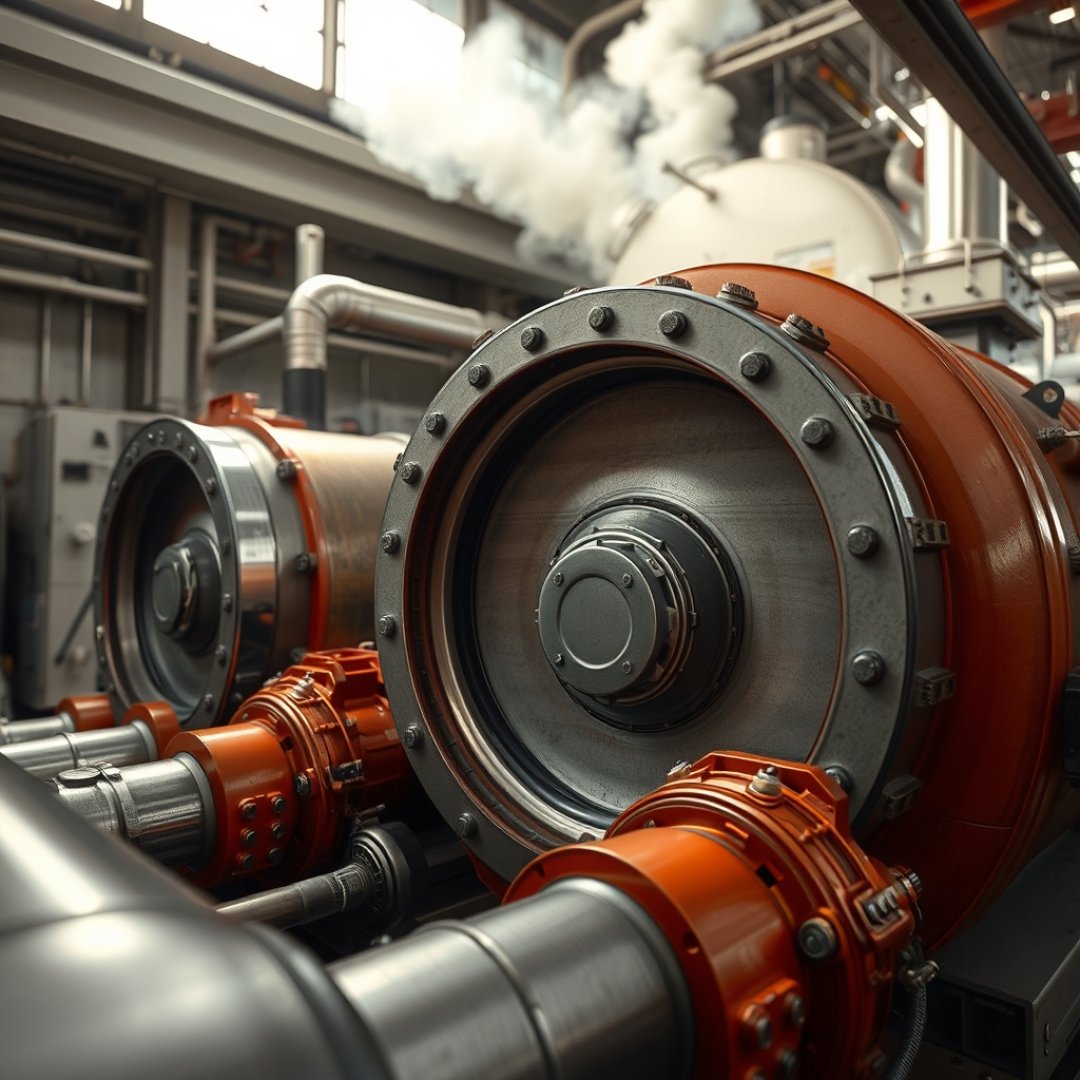
At pressures exceeding 7.38 MPa and temperatures above 31.1 degrees Celsius, CO2 enters a supercritical state, exhibiting the density of a liquid and the viscosity of a gas. Supercritical CO2 Brayton Cycles exploit this density to drastically reduce the size of turbomachinery. Because the working fluid is highly compressible near the critical point, the work required for compression is significantly lower than that of gaseous cycles.
Efficiency Metrics and Heat Transfer
- Reduced Work Input: Lower compressor power consumption yields higher net cycle efficiency.
- Compact Heat Exchangers: High fluid density allows for printed circuit heat exchangers (PCHE) that occupy significantly less space.
- Operational Temperature: These systems perform optimally in heat recovery scenarios ranging from 400 to 700 degrees Celsius.
Economic and Industrial Implementation
Reducing CAPEX in Power Blocks
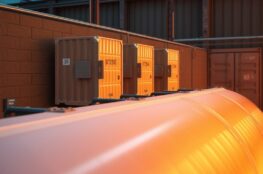
The primary economic driver for the adoption of sCO2 hardware is the reduction in facility footprint. Traditional steam systems require extensive piping and massive boilers; in contrast, sCO2 systems offer a modular architecture that fits within existing industrial layouts. This portability minimizes onsite construction costs and allows for easier integration into retrofitted brownfield sites.
ROI and Energy Recovery
Companies utilizing sCO2 systems report improved internal rates of return (IRR) due to the recapturing of low-to-medium-grade waste heat. By converting process heat that would otherwise be rejected into the atmosphere, industrial plants can offset grid dependency, lowering electricity costs and improving compliance with ESG-related carbon taxation policies.
Regulatory Standards and Safety Compliance
Materials and Integrity Standards
Operating under high-pressure, high-temperature conditions requires strict adherence to ASME Section VIII and related global pressure vessel codes. Engineers must select specific nickel-based alloys, such as Inconel 617 or 740H, to prevent stress corrosion cracking and ensure the long-term integrity of the turbomachinery and heat exchangers.
Grid Interconnection Protocols
For systems connected to the microgrid, compliance with IEEE 1547 standards is mandatory to ensure frequency regulation and voltage support. The rapid start-up and ramp-up capabilities of these cycles make them highly responsive to the fluctuations inherent in variable renewable energy integration, providing critical ancillary services to the wider smart energy grid.
Frequently Asked Questions
What is the main advantage of sCO2 cycles over traditional steam cycles?
The primary advantage is higher power density and efficiency, allowing for smaller, more cost-effective machinery that can recover waste heat that steam systems cannot economically handle.
Are sCO2 systems carbon-neutral?
The systems themselves are closed-loop, meaning the CO2 is recycled. They reduce net emissions by recovering industrial waste heat, thereby reducing the electricity consumption of the facility from the grid.
What is the lifespan of sCO2 turbomachinery?
With proper material selection for high-temperature creep resistance, these systems are designed for service lives exceeding 20 to 30 years, consistent with standard industrial utility equipment.