As the integration of high-penetration variable renewable energy sources continues to challenge power system stability, Supercapacitor Energy Storage has emerged as a mission-critical hardware solution for grid operators in 2026. Unlike traditional chemical battery storage systems which often struggle with high-cycle fatigue during rapid response tasks, supercapacitors utilize electrochemical double-layer capacitance to provide nearly instantaneous power bursts. This capability is essential for primary frequency control and mitigating short-term power quality fluctuations that destabilize modern smart grids. By bridging the gap between momentary disturbances and long-duration storage needs, this technology ensures that grid frequency regulation remains within strict operating parameters, effectively reducing the mechanical strain on synchronous generators and enhancing overall system reliability during the energy transition.
Technical Mechanisms and Performance Metrics
Electrochemical Principles
Supercapacitors operate via physical charge separation at the electrode-electrolyte interface, allowing for power densities exceeding 10 kW/kg. This hardware architecture supports virtually unlimited cycle life, as there is no deep intercalation process inducing lattice stress.
Efficiency and Response Time
- Response Time: Sub-millisecond latency for frequency injection.
- Round-Trip Efficiency: Typically exceeding 95% due to minimal internal ohmic losses.
- Cycle Stability: Sustains over 1,000,000 charge-discharge cycles without significant degradation.
Integration in Smart Grid Architectures
Grid Ancillary Services
Integrating Supercapacitor Energy Storage alongside Battery Energy Storage Systems (BESS) creates a hybrid topology. While BESS manages energy shifting, the supercapacitor handles high-frequency noise and transient spikes.
Compliance with IEEE 1547
The hardware must comply with updated IEEE 1547 standards for distributed energy resource interconnection. The implementation of fast-acting inverters enables precise active power regulation, allowing grid operators to meet stringent frequency response requirements in real-time.
Economic Viability and CAPEX Analysis
Cost Considerations
While the initial CAPEX per kWh remains significantly higher than lithium-ion alternatives, the Levelized Cost of Storage (LCOS) is favorable when optimized for high-frequency, short-duration applications. The total cost of ownership is minimized by the elimination of expensive battery replacement cycles over a 15-year operational window.
Deployment Scenarios
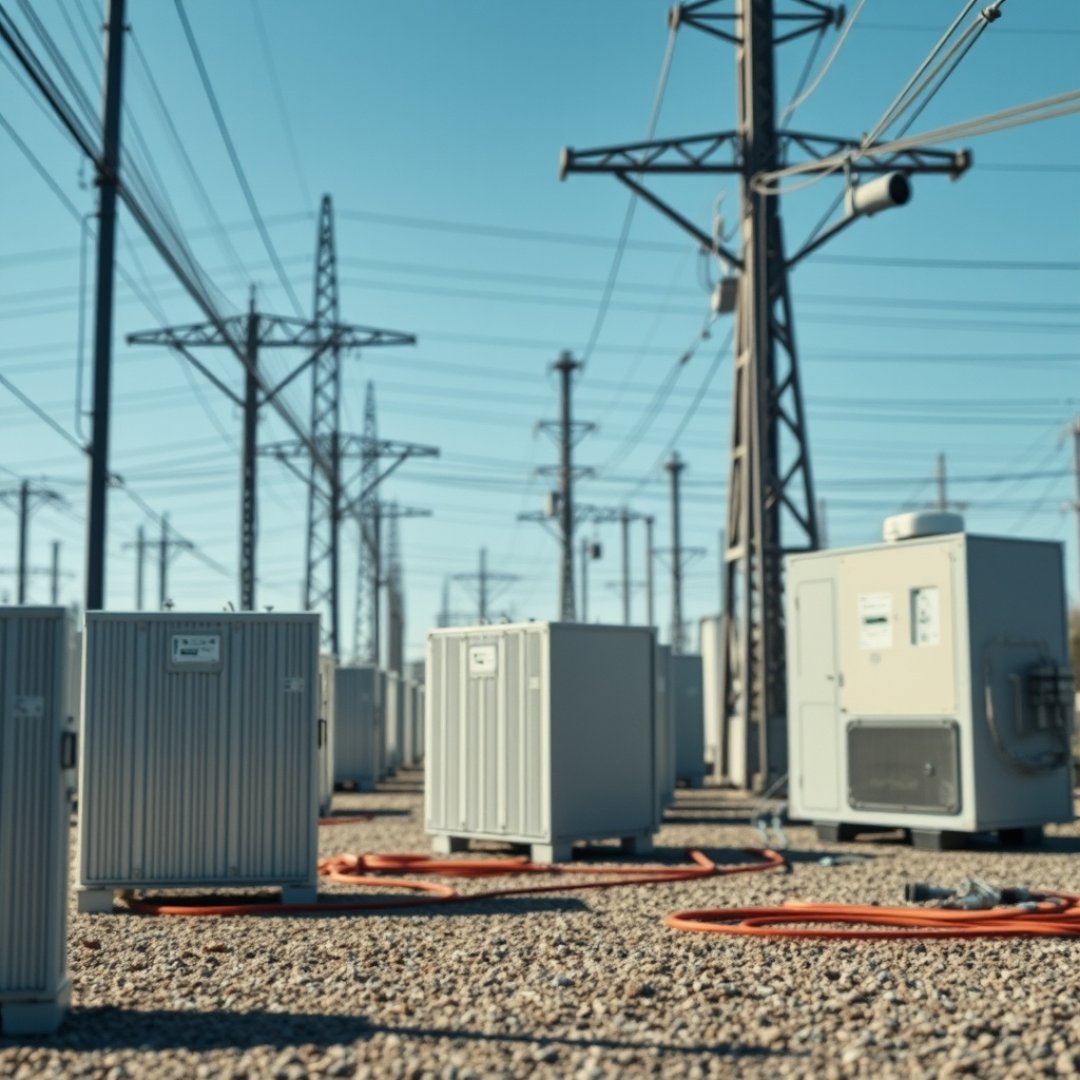
Utility-scale deployments are currently focusing on microgrid nodes and industrial zones where transient power quality issues are prevalent. By mitigating voltage sags and frequency deviations, these systems prevent costly equipment failure in sensitive manufacturing environments.
Frequently Asked Questions
How does Supercapacitor Energy Storage differ from lithium-ion batteries?
Supercapacitors store energy physically through electric fields rather than chemically, enabling much faster power discharge and vastly higher cycle life, though with lower overall energy density.
Why is this technology relevant for grid frequency regulation?
The extreme power density allows supercapacitors to provide an instantaneous response to frequency fluctuations, stabilizing the grid before slower storage or traditional generation sources can react.
Are there specific standards for supercapacitor grid integration in 2026?
Yes, they must adhere to IEEE 1547 and local grid code requirements regarding power quality, harmonics injection, and safe interconnection protocols for distributed energy resources.