
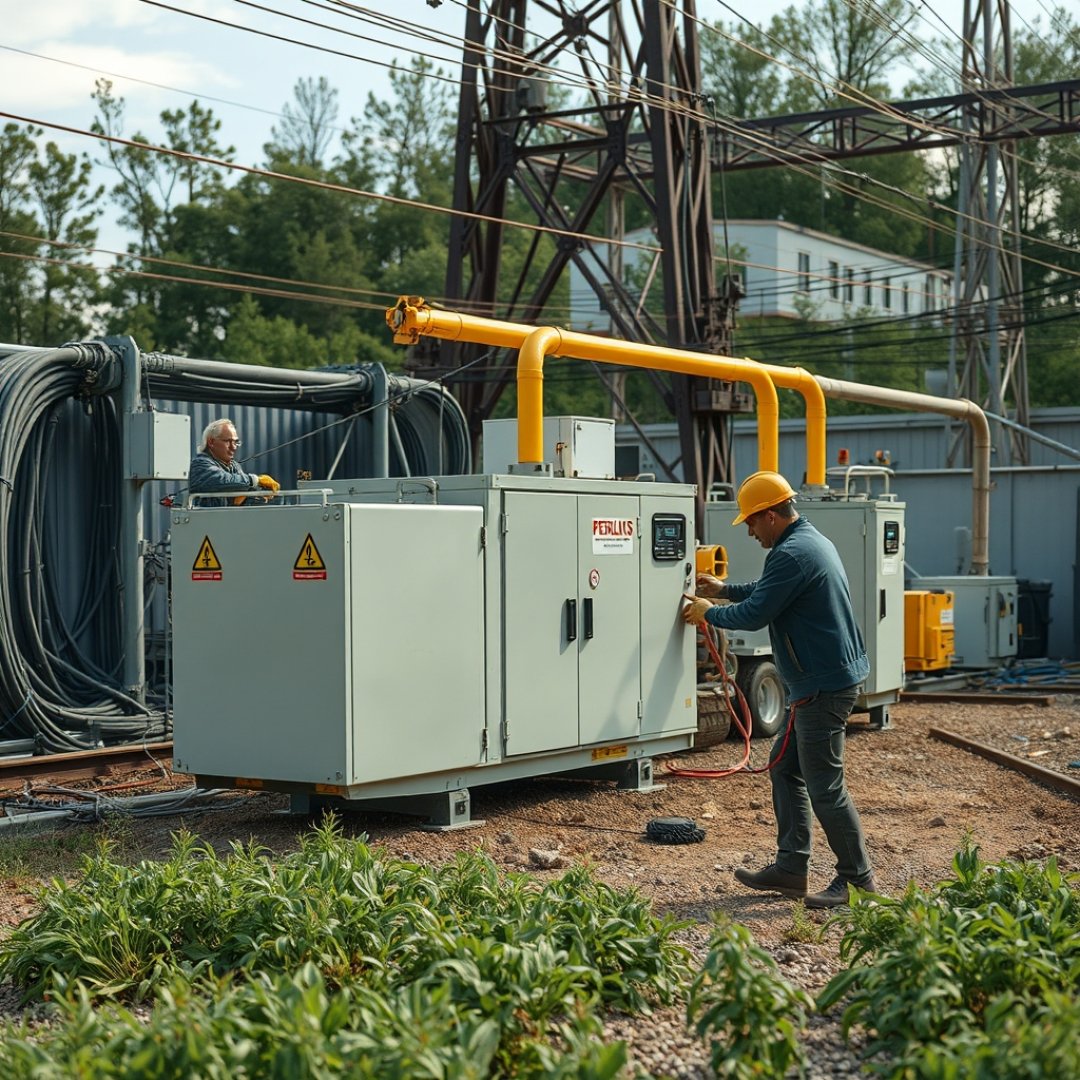
In the landscape of modern power infrastructure, the integration of Kinetic Energy Recovery systems has become a pivotal strategy for maintaining frequency stability within increasingly volatile smart grids. By leveraging high-inertia flywheels and advanced regenerative braking mechanisms typically reserved for heavy-duty industrial applications, grid operators are effectively mitigating the intermittent nature of renewable energy sources. This technology functions as a rapid-response buffer, capable of injecting or absorbing active power in milliseconds, thereby fulfilling the stringent requirements of primary frequency response and secondary reserve markets. As of August 2026, the deployment of such mechanical storage hardware offers a robust alternative to chemical battery assets, particularly in environments where high cycle life and instantaneous discharge are non-negotiable for grid operators striving to meet new IEEE 1547 interconnection standards for modernized energy distribution networks.
Electromechanical Working Mechanisms
Principles of Inertial Storage
Kinetic energy systems operate by storing energy in a rotating mass, often suspended in a vacuum to minimize friction-induced losses. The energy density is determined by the moment of inertia and the angular velocity of the rotor. Current 2026 iterations utilize high-strength carbon fiber composites to achieve rotational speeds exceeding 40,000 RPM.
Regenerative Coupling
The system connects to the grid via a bidirectional power electronics converter, which facilitates the transition between motoring and generating modes. This setup ensures that excess energy during grid over-frequency events is stored as rotational kinetic energy, while under-frequency events trigger near-instantaneous discharge to support local load demands.
Efficiency Metrics and Operational Longevity
Round-Trip Efficiency
Unlike electrochemical batteries, which suffer from capacity degradation over time, these mechanical systems maintain consistent round-trip efficiencies exceeding 90% regardless of their cycle count. This makes them ideal for high-frequency regulation tasks where throughput is the primary driver of operational expenses.
Technical Specifications
- DoD (Depth of Discharge): Full 100% discharge capabilities without thermal runaway risk.
- Response Time: Sub-10ms ramp time for frequency regulation signals.
- Cycle Life: Expected 20-year service life with minimal maintenance requirements compared to li-ion alternatives.
Economic Implications and Grid ROI
CAPEX and Market Integration
While the initial capital expenditure for Kinetic Energy Recovery hardware is higher than traditional capacitor banks, the long-term ROI is secured through participation in lucrative ancillary service markets. Regulators in the EU and North America are increasingly favoring mechanical storage for its fire safety and lower environmental footprint in urban microgrids.
Strategic Deployment
Integrators are now co-locating these systems near large-scale solar farms or industrial zones to act as a localized stabilizer. This minimizes transmission congestion and lowers the necessity for heavy curtailment during peak production hours, aligning with the operational mandates set forth by recent grid modernization policies.
Frequently Asked Questions
How does Kinetic Energy Recovery compare to lithium-ion batteries for grid frequency support?
Kinetic systems provide faster response times and infinite cycle life without the risk of thermal degradation or chemical fire, though they offer less energy density than large-scale battery storage arrays.
Are there specific environmental benefits to using mechanical flywheel storage?
Yes, they eliminate the need for rare-earth metals or complex electrolyte disposal, and the primary components are made from recyclable steel or carbon fiber composites.
What is the primary maintenance requirement for these systems in 2026?
Maintenance is primarily focused on the magnetic bearing systems and vacuum pump integrity, which typically require annual inspections rather than the cell-level monitoring required for chemical batteries.