
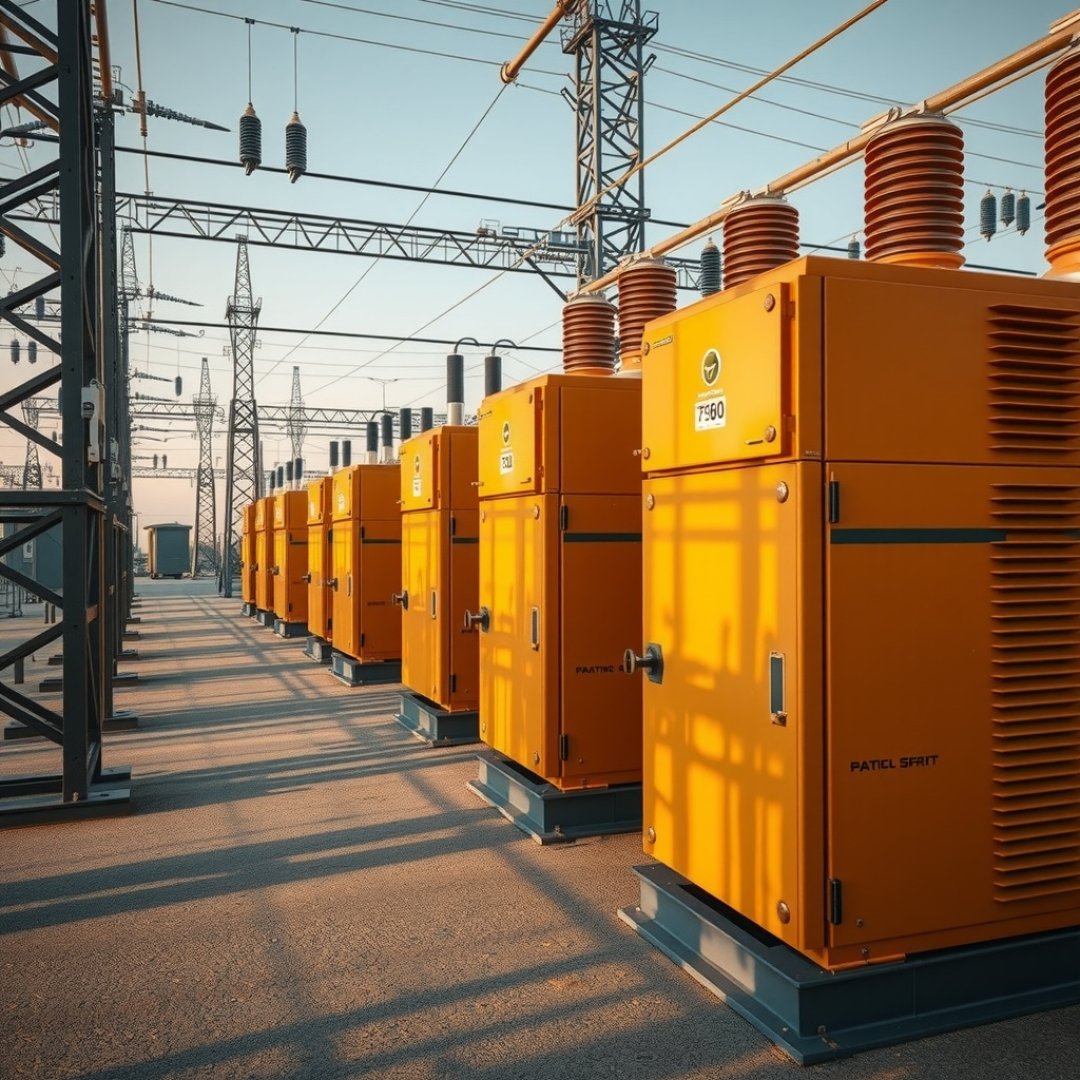
The integration of high-penetration renewable energy sources has introduced significant volatility into modern electrical grids, necessitating advanced solutions for power quality management. Dynamic Static Synchronous Compensators (STATCOMs) have emerged as the cornerstone technology for maintaining precise voltage stability and providing essential reactive power support across utility-scale networks in 2026. By utilizing sophisticated voltage-source converters (VSCs) based on insulated-gate bipolar transistor (IGBT) technology, these devices can inject or absorb reactive power with near-instantaneous response times, far surpassing the traditional performance of mechanically switched capacitor banks. As transmission system operators face increasing challenges with intermittent generation profiles and reduced system inertia, the deployment of modular Static Synchronous Compensators provides a scalable pathway for grid resilience, ensuring compliance with evolving IEEE 1547 and grid-forming inverter requirements while effectively mitigating voltage sags and swells during transient disturbances.
Operational Mechanisms and Control Architectures
Principles of VSC Operation
At the core of a STATCOM is the voltage-source converter, which generates a controllable AC voltage output. By maintaining the converter output voltage at a specific phase angle relative to the grid voltage, the device can effectively regulate the flow of reactive power. Pulse-width modulation (PWM) strategies are employed to minimize harmonic distortion, ensuring that the compensation provided is clean and compliant with stringent electromagnetic compatibility standards.
Grid-Forming vs. Grid-Following Modes
Modern implementations in 2026 emphasize the shift toward grid-forming capabilities. Unlike traditional grid-following units that rely on phase-locked loops (PLLs) to track grid voltage, grid-forming STATCOMs act as voltage sources, providing essential synthetic inertia to the grid. This evolution is critical for systems where low-inertia renewable sources predominate, helping to stabilize system frequency and voltage during contingency events.
Performance Metrics and Technical Specifications
Response Time and Dynamic Range
A primary advantage of the STATCOM is its sub-cycle response time, typically measured in the range of 10 to 30 milliseconds. This rapid response is essential for damping power oscillations and providing continuous voltage regulation under dynamic load conditions. Efficiency metrics for these systems now consistently exceed 98.5%, owing to advancements in wide-bandgap (WBG) semiconductor materials like Silicon Carbide (SiC).
Reactive Power Capacity
- Continuous Compensation: Provides full-rated capacitive and inductive reactive power support.
- Overload Capability: Many systems are now designed to provide short-term 200% reactive power surge capability to support fault-ride-through (FRT) requirements.
- DoD Considerations: Unlike battery-based storage, STATCOMs have no depth-of-discharge constraints, allowing for infinite cycling without capacity degradation.
Economic Implications and Infrastructure ROI
CAPEX and System Integration
While the initial capital expenditure for a STATCOM installation remains higher than traditional passive solutions, the total cost of ownership (TCO) is significantly lower when factoring in reduced maintenance requirements and improved grid reliability. Industry data from 2026 suggests that the integration of STATCOMs allows transmission operators to defer expensive infrastructure upgrades by maximizing the capacity of existing transmission lines.
Regulatory Compliance and Grid Revenue
Operators utilizing these devices can better meet the requirements set by the latest grid codes, such as those governing reactive power dispatch and voltage regulation ancillary services. Revenue models are increasingly incorporating performance-based payments, where utilities are compensated for their ability to maintain voltage within narrow deadbands, providing a clear ROI for large-scale deployments.
Frequently Asked Questions
What is the primary difference between a STATCOM and a SVC?
A Static Var Compensator (SVC) uses mechanically or thyristor-switched capacitors and reactors, whereas a STATCOM uses voltage-source converters. STATCOMs offer faster response times and better performance at lower grid voltages.
How do STATCOMs contribute to renewable energy integration?
They stabilize grid voltage by providing reactive power compensation, which helps mitigate the voltage fluctuations caused by the intermittent nature of wind and solar power generation.
Are STATCOMs capable of providing active power?
Standard STATCOMs primarily handle reactive power. However, if integrated with an energy storage system (such as batteries or supercapacitors), they can provide both active and reactive power support.