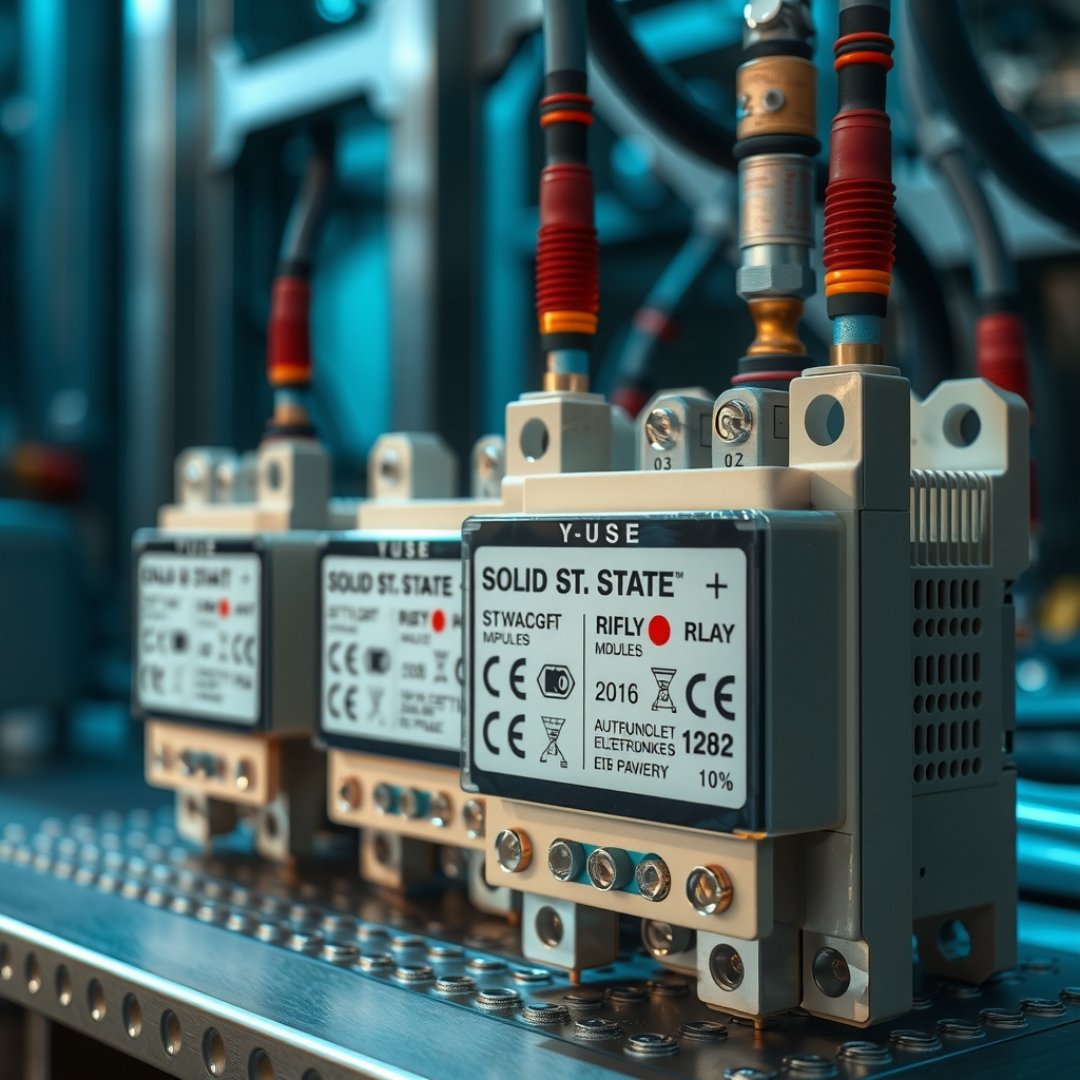
As industrial demand for rapid, high-cycle switching increases across utility-scale energy networks, Solid-State Relay Modules have emerged as the critical component for modern grid management. By replacing mechanical contactors with semiconductor-based switching, these modules eliminate arcing, contact bounce, and the inevitable mechanical wear that plagues traditional relay systems. In 2026, the integration of wide-bandgap semiconductors into these modules allows for significantly higher power densities and reduced switching losses. This transition is essential for the stabilization of distributed energy resources, where precision, speed, and long-term durability are non-negotiable requirements for grid-forming inverters and high-voltage DC protection circuits. As we refine the control architectures for microgrids, the adoption of advanced semiconductor switching technologies ensures that response times remain within the microsecond range, vastly improving the reliability of protective relaying in mission-critical cleantech hardware deployments.
Technical Architecture and Switching Efficiency
Semiconductor Integration
Modern Solid-State Relay Modules utilize Silicon Carbide (SiC) or Gallium Nitride (GaN) MOSFETs to manage electrical loads. Unlike traditional electromechanical relays, these solid-state variants perform switching through electron flow across a p-n junction, which offers near-instantaneous response times.
Thermal Management Protocols
- Heat Dissipation: The focus remains on optimizing thermal resistance (Rth) between the semiconductor die and the heat sink.
- Conduction Losses: Advancements in RDS(on) reduction help maintain high efficiency during continuous load operations.
- Isolation Standards: Optical isolation is standard, ensuring signal integrity even during high-voltage transients on the primary circuit.
Reliability Metrics in Grid-Scale Applications
DoD and Cycle Life
In grid-connected battery storage systems, the switching relays must withstand millions of cycles without degradation. The absence of moving parts in Solid-State Relay Modules means that reliability is decoupled from cycle count, unlike mechanical contacts that suffer from pitting and welding under inductive loads.
Fault Tolerance
Engineers are now implementing redundant bridge configurations to prevent single-point failures. By monitoring the junction temperature through integrated digital sensors, current systems can derate operations dynamically, preventing thermal runaway and ensuring adherence to safety protocols like IEC 62314 for semiconductor contactors.
Economic Implications and ROI
CAPEX vs. OPEX Analysis
While the upfront CAPEX for Solid-State Relay Modules is higher than mechanical alternatives, the total cost of ownership is significantly lower. The primary drivers include:
- Maintenance Reduction: Zero contact maintenance requirements drastically lower site-visit frequency.
- System Longevity: Elimination of failure-prone mechanical components extends the overall life cycle of BESS installations.
- Efficiency Gains: Lower power consumption during the ‘on’ state contributes to a measurable improvement in the overall round-trip efficiency of energy storage assets.
Frequently Asked Questions
What is the primary advantage of solid-state relays over electromechanical ones?
Solid-state relays lack moving parts, which eliminates contact wear, arcing, and mechanical fatigue, resulting in a much longer service life and higher switching frequencies.
Are these modules suitable for high-voltage grid applications?
Yes, modern modules utilize high-voltage SiC semiconductors capable of managing the high power density requirements found in utility-scale grid-forming inverters.
How do Solid-State Relay Modules handle thermal management?
They employ low-thermal-resistance packaging and integrated thermal sensing, allowing for real-time monitoring and active cooling control to maintain safe operating junction temperatures.