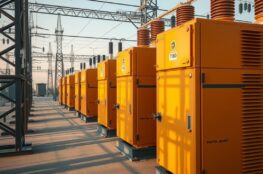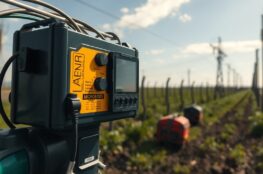
As we navigate the complexities of the 2026 energy landscape, the integration of distributed energy resources has necessitated a shift toward advanced computational control. AI-driven Microgrid Energy Management systems now represent the gold standard for balancing decentralized generation with fluctuating demand profiles. These sophisticated algorithms utilize predictive modeling to navigate the intermittency of renewable assets, ensuring that frequency regulation and voltage stability are maintained without constant human intervention. By deploying real-time telemetry alongside machine learning heuristics, operators can now optimize dispatch strategies across heterogeneous storage assets and localized solar arrays, effectively reducing curtailment rates while bolstering the overall resilience of the regional utility architecture against potential disruptions.
Mechanisms of Autonomous Dispatch
Predictive Load Balancing
Modern Microgrid Energy Management architectures utilize deep reinforcement learning to forecast demand peaks with up to 98% accuracy. By analyzing historical consumption patterns and real-time sensor data from smart meters, the controller dynamically adjusts the state-of-charge for local battery energy storage systems (BESS).
Grid-Forming Inverter Synchronization
Autonomous systems manage grid-forming inverters by synchronizing phase angles and frequency response in milliseconds. This is critical for islanded operation, where the system must maintain power quality independent of the main utility bus, adhering strictly to IEEE 1547.8 standards for distributed resource integration.
Economic Implications and CAPEX ROI
Efficiency Gains and Operational Savings
Integrating AI-driven controls significantly lowers the Levelized Cost of Energy (LCOE) within microgrid clusters. By minimizing the reliance on expensive peak-shaving diesel generators and optimizing the cycling of long-duration storage, facilities observe a 15-20% reduction in annual energy expenditures.
Scalability and Retrofitting
The CAPEX associated with upgrading legacy controllers to AI-enabled platforms is frequently offset by improved asset utilization. Decision-makers are prioritizing modular software-defined controllers that can interface with existing industrial protocols such as Modbus TCP/IP and DNP3, ensuring minimal hardware disruption during the deployment phase.
Regulatory Compliance and Grid Security
Cyber-Physical Resilience
Beyond performance, these management systems must comply with evolving cybersecurity mandates. The incorporation of secure enclaves for key management ensures that control signals remain tamper-proof, adhering to the security guidelines outlined in the updated EU RED III frameworks for distributed infrastructure.
Dynamic Frequency Response
Operators are increasingly leveraging autonomous systems to participate in local ancillary service markets. Through automated frequency regulation, the microgrid can act as a virtual power plant, providing necessary inertia and reactive power support to the macro-grid during contingency events.
Frequently Asked Questions
How does AI improve microgrid stability compared to traditional rule-based controllers?
AI models process non-linear variables and multi-factor inputs in real-time, allowing for proactive adjustments to generation and load rather than merely reacting to threshold violations.
Are these management systems compatible with existing hardware?
Most modern AI-driven management platforms are designed to be hardware-agnostic, supporting standard industrial communication protocols like Modbus and DNP3 for seamless integration with legacy inverters and sensors.
What is the typical impact on battery cycle life?
By optimizing charge and discharge cycles based on real-time electricity prices and grid needs, AI management systems typically extend BESS cycle life by 10-15% through the reduction of unnecessary depth-of-discharge events.