
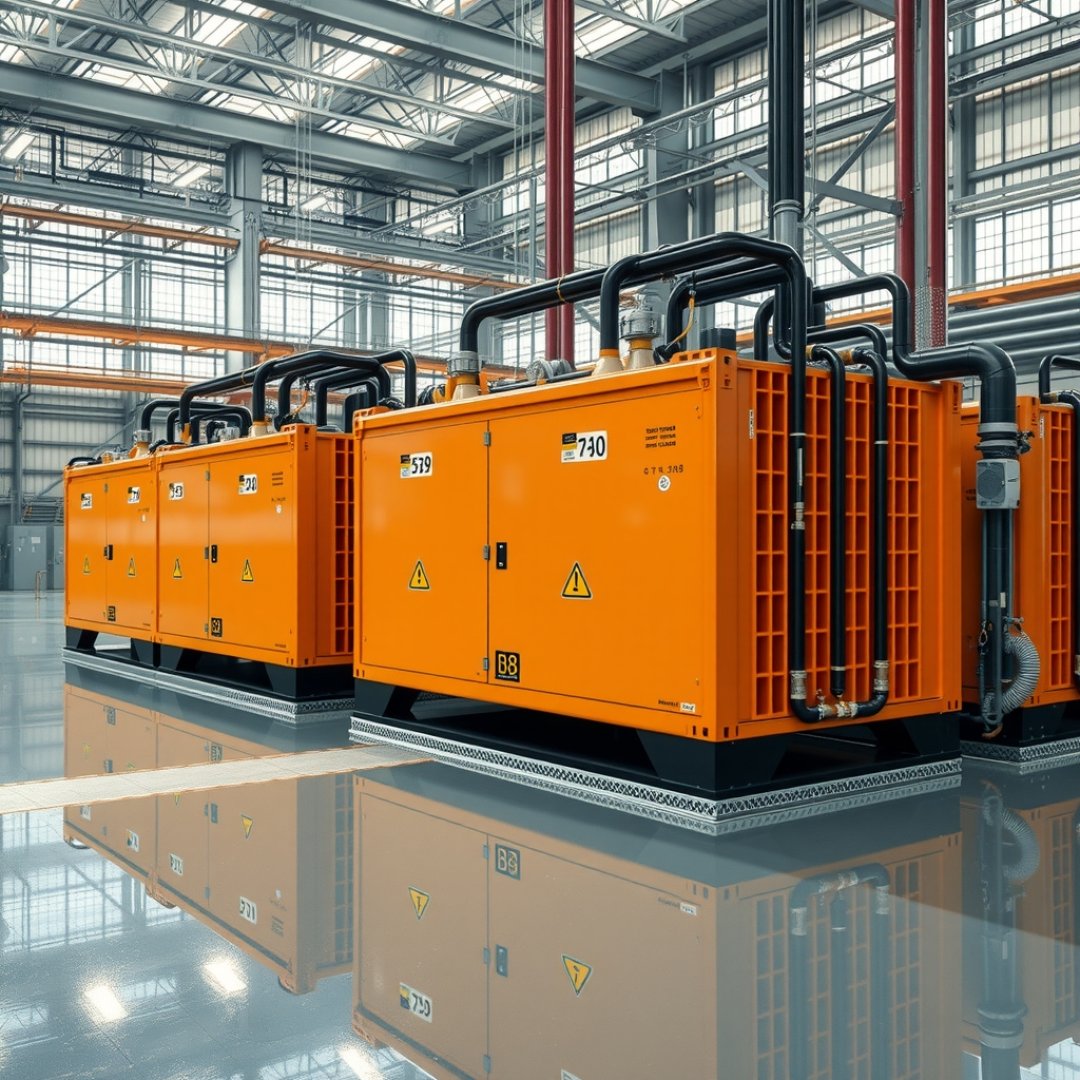
As the global transition toward carbon-neutral industrial processes accelerates, Solid-State Hydrogen Storage has emerged as a critical technological pathway for overcoming the inherent challenges of gaseous and liquid hydrogen containment. By leveraging metal hydrides and complex chemical structures, these storage systems enable high-density energy containment at lower pressures compared to traditional 700-bar tanks. In 2026, the focus has shifted toward enhancing the gravimetric and volumetric energy density of these materials, addressing the thermal management issues associated with hydrogen adsorption and desorption cycles. This article examines the current state of material science in this sector, evaluating how specific metal-organic frameworks and magnesium-based alloys are setting new benchmarks for long-duration, safe, and efficient hydrogen energy storage in industrial settings, ultimately reducing the overall system footprint and infrastructure requirements for the hydrogen economy.
Material Science and Adsorption Mechanisms
Metal Hydride Dynamics
At the core of Solid-State Hydrogen Storage lies the reversible reaction between hydrogen gas and metal lattices. In 2026, research focuses on magnesium-based alloys doped with transition metals to lower the reaction temperature and improve kinetic performance. Unlike pressurized gas, which requires massive steel cylinders, solid-state materials chemically bond hydrogen, providing a significantly higher volumetric density.
- Magnesium Hydride (MgH2): Offers high capacity but requires temperatures exceeding 300 degrees Celsius for release.
- Complex Hydrides: Borohydrides exhibit high gravimetric density but present challenges in regeneration cycles.
- Material Doping: Nano-structuring and the addition of nickel or iron catalysts significantly reduce activation barriers.
Thermal Management and System Efficiency
Regulating the Exothermic Process
The absorption of hydrogen into a solid host is an exothermic reaction, requiring efficient thermal management to maintain optimal operating conditions. Solid-State Hydrogen Storage systems utilize advanced heat exchangers integrated directly into the reactor vessel to manage the heat generated during refueling and the heat required for extraction. Engineering teams are currently optimizing the COP (Coefficient of Performance) for these thermal management loops to ensure that the energy spent on cooling/heating does not negate the benefits of the high-density storage.
Operating Metrics
- Thermal Conductivity: Enhanced by mixing host powders with conductive additives like expanded graphite.
- Energy Efficiency: Modern systems target a round-trip energy efficiency exceeding 75 percent through integrated waste heat recovery.
- Cyclic Stability: Accelerated aging tests demonstrate over 2,000 cycles with minimal capacity loss in nickel-doped MgH2 variants.
Commercial Viability and Industrial ROI
Infrastructure and Economic Implications
Integrating Solid-State Hydrogen Storage into industrial infrastructure, such as green steel production or heavy-duty logistics, requires a careful assessment of CAPEX versus traditional tank storage. While the current material costs remain high due to rare earth or specialized catalyst requirements, the decreased land use and improved safety profile provide a compelling ROI for high-density, stationary applications. Regulatory alignment with EU safety standards for hydrogen handling ensures that these systems can be deployed in urban or sensitive industrial zones where high-pressure vessels face stringent permitting restrictions.
- Reduced Footprint: Enables higher storage capacity within confined industrial footprints.
- Safety Performance: Operates at low pressures, eliminating the risk of catastrophic decompression typical of gaseous systems.
- Integration Standards: Compliance with emerging international standards for hydride-based storage systems is essential for project bankability in 2026.
Frequently Asked Questions
What is the main advantage of Solid-State Hydrogen Storage over gas compression?
The primary advantage is volumetric density; it allows for hydrogen storage at much lower pressures, significantly increasing safety and reducing the footprint required for storage facilities.
What are the primary challenges in 2026 for this technology?
The main challenges include managing the heat transfer during hydrogen release and reducing the material costs associated with rare-earth or transition metal catalysts.
Is solid-state hydrogen storage suitable for mobility applications?
While currently focused on stationary industrial use, research is ongoing to reduce the mass and improve kinetics for heavy-duty transit applications, though high gravimetric weight remains a hurdle.