Compressed Air Energy Storage has emerged as a cornerstone of grid-scale stability in 2026, providing a robust, mechanical alternative to chemical battery arrays for long-duration applications. As renewable penetration rates climb, the need for multi-gigawatt-hour storage capacity has never been more critical for transmission system operators balancing intermittent loads. By utilizing advanced adiabatic processes, modern facilities mitigate historical efficiency losses, achieving round-trip efficiency ratings that now compete effectively with large-scale pumped hydro. This technology leverages underground geological caverns to store potential energy as high-pressure air, which is then expanded through turbines to drive generators during peak demand or deficit periods. Engineering teams are increasingly adopting these systems to satisfy the growing requirement for eight-to-twenty-hour discharge durations, ensuring that grid frequency regulation and ancillary services remain stable as thermal generation assets continue to retire in favor of wind and solar capacity.
Technological Advancements in Adiabatic Compression
Improving Round-Trip Efficiency
Traditional diabatic systems suffered from significant energy loss due to the heat generated during air compression. In 2026, the industry standard has shifted toward Adiabatic Compressed Air Energy Storage (A-CAES). This innovation captures the heat of compression in high-capacity thermal energy storage (TES) media, which is then re-introduced during the expansion phase.
- Thermal Retention: Utilizing specialized molten salts or ceramic heat exchangers to maintain temperatures above 500°C.
- Efficiency Metrics: Modern adiabatic plants are reporting round-trip efficiencies (RTE) between 70% and 75%, a substantial improvement over the 45-50% benchmarks of legacy facilities.
- Exergy Management: Integrated software controllers dynamically adjust pressure ratios to match real-time grid frequency requirements.
Grid-Scale Integration and Economic Viability
CAPEX and Operational ROI
The economic feasibility of large-scale deployment rests on the Levelized Cost of Storage (LCOS) over a projected 30-year plant life. Unlike lithium-ion alternatives, these mechanical storage systems do not suffer from chemical degradation, significantly reducing O&M costs over time.
- Scale Advantage: CAPEX per kilowatt-hour decreases significantly as the cavern volume increases, making these systems ideal for regional load balancing.
- Regulatory Alignment: These facilities are increasingly qualifying for ancillary service market revenue under IEEE 1547 interconnection standards.
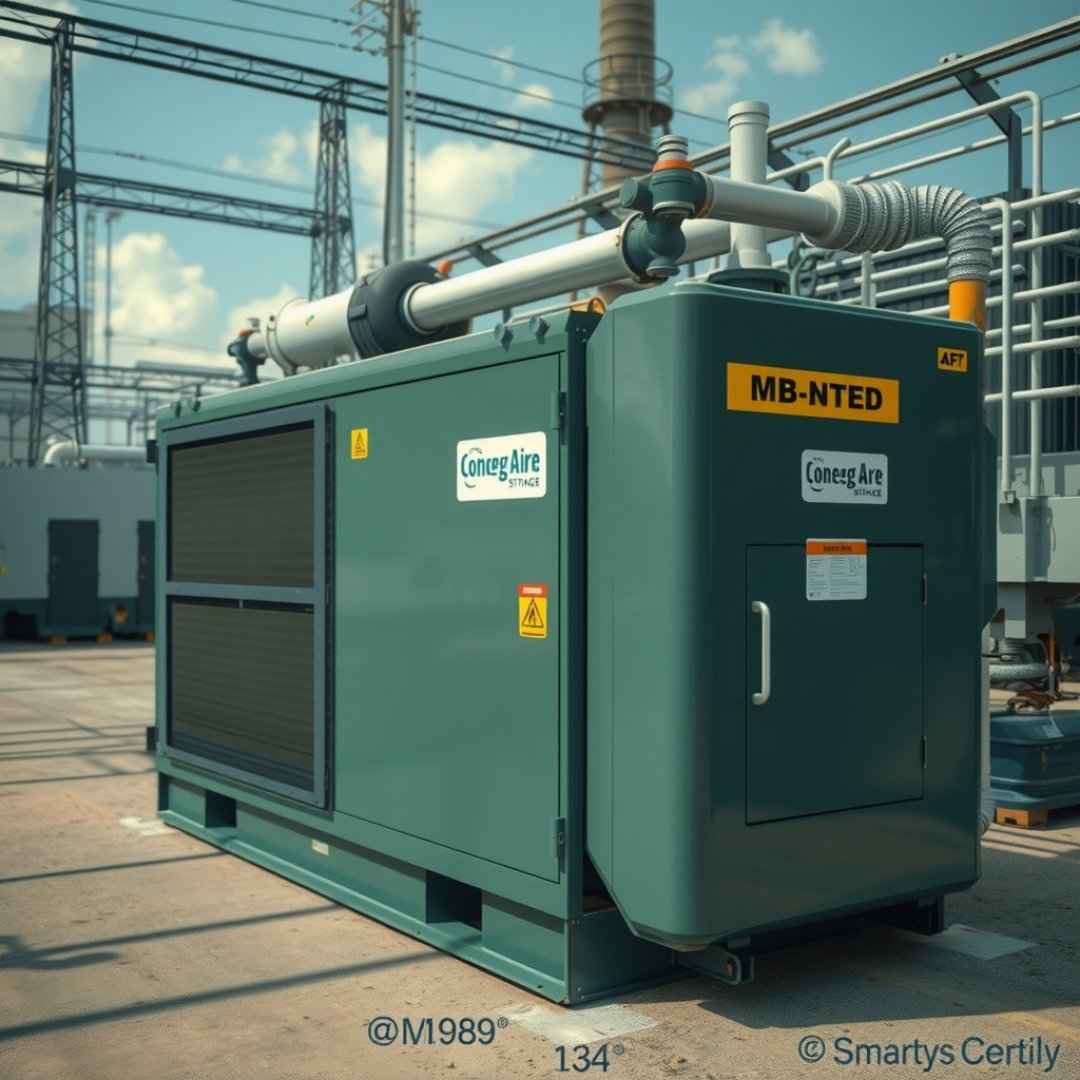
- Modular Expansion: Recent developments in modular surface-level high-pressure vessels are enabling deployment in regions lacking naturally occurring geological caverns.
Standards and Safety Compliance
Regulatory Frameworks in 2026
As these facilities reach utility-grade deployment, adherence to strict safety and environmental protocols is mandatory. Operators must comply with regional standards governing high-pressure vessel certification and environmental impact assessments regarding subsurface geological stability.
- ISO 50001 Adherence: Many operators are integrating ISO 50001 energy management frameworks to optimize charging cycles relative to spot market electricity prices.
- Safety Integrity Levels: Deployment of redundant control systems ensures that pressure-vessel failure probabilities are kept well below 10^-7 per year, meeting stringent regional safety requirements for grid-adjacent assets.
Frequently Asked Questions
What is the primary benefit of A-CAES over battery energy storage systems?
A-CAES offers superior longevity and scalability for long-duration storage needs, often exceeding 20 hours, without the chemical degradation common in electrochemical batteries.
What is the current target round-trip efficiency for state-of-the-art A-CAES plants?
Modern adiabatic facilities are currently achieving round-trip efficiency levels between 70% and 75% by effectively recycling the heat of compression.
Do these systems require specific geological conditions?
While traditional large-scale projects use salt caverns, ongoing innovation in modular pressure-vessel design is making the technology viable in regions without suitable natural underground formations.